



Ohio Eviction Notice Overview
Ohio's eviction framework is governed by the Ohio Revised Code (ORC) Chapter 1923 (Forcible Entry and Detainer) and Chapter 5321 (Landlord-Tenant Law). Unlike states such as Pennsylvania or Oregon that use a 10-day notice period, Ohio relies on a 3-day noticefor non-payment of rent under ORC Section 1923.04. This is one of the shortest notice periods in the country and reflects Ohio's historically landlord-favorable eviction framework.
For lease violations other than non-payment, Ohio law requires a 30-day notice for month-to-month tenancies under ORC Section 5321.17. For fixed-term leases with specific violation cure provisions, the lease terms typically control. Ohio is one of the few states that allows landlords to file eviction for holdover tenants without any prior notice at all, since the lease expiration functions as notice. Understanding these distinctions is critical for Ohio landlords who may mistakenly use a 10-day notice period based on guidance from other states.
3 Days
Non-payment notice
$75-$121
Filing fees
Written
Notice required
4-8 wks
Total process
Ohio's Actual Notice Periods
Ohio uses different notice periods depending on the reason for eviction and the type of tenancy. The state does not recognize a 10-day notice period in its statutes.
Important: Ohio Does Not Use 10-Day Notices
If you serve a 10-day notice in Ohio for non-payment of rent, a court may still accept it since you provided more time than the statutory 3-day minimum. However, using non-standard notice periods creates unnecessary delay and may cause confusion in court proceedings. For best results, use the exact statutory periods outlined in ORC Chapter 1923.
| Eviction Reason | Notice Period | Statute |
|---|---|---|
| Non-payment of rent | 3 days | ORC §1923.04 |
| Drug-related activity | 3 days (no cure) | ORC §1923.051 |
| Month-to-month termination | 30 days | ORC §5321.17 |
| Holdover after lease expires | No notice required | ORC §1923.02 |
| Lease violations (fixed-term) | Per lease terms | ORC §5321.11 |
Legal Requirements Under the ORC
Ohio's eviction notice requirements are established by ORC Chapter 1923. A defective notice is the most common reason Ohio municipal courts dismiss eviction cases. Every element of the notice must comply with the statute to survive a tenant's challenge.
Required Notice Elements
- Written Format: Ohio requires all eviction notices to be in writing. Verbal or text-message notices are legally insufficient under ORC §1923.04
- Tenant Identification: Name all tenants listed on the lease. Serving notice to only one co-tenant may not bind others
- Property Address: Include the complete street address including unit or apartment number for multi-unit buildings
- Specific Amount Owed: For non-payment, itemize the rent owed by month, any applicable late fees, and the total due
- Cure or Quit Language: Clearly state that the tenant must either pay the amount due or vacate within 3 days
- Date of Service: The notice must reflect the date it was actually served, as the cure period begins the following day
How to Serve an Eviction Notice in Ohio
Under ORC Section 1923.04, Ohio accepts several methods of service. The chosen method directly affects when the notice period begins running, so landlords should select their approach carefully.
Personal Service
Hand the notice directly to the tenant. This is the strongest form of service in Ohio courts and starts the clock immediately
Residence Service
Leave the notice with an adult of suitable age and discretion at the tenant's dwelling if the tenant is unavailable
Post and Mail
Attach the notice to the front door in a visible location and mail a copy via first-class mail the same day. Photograph the posted notice
Prepare Your Proof of Service
Complete a written proof of service documenting the method, date, time, and witness. Ohio courts require this when filing the FED complaint
Ohio Eviction Timeline
Ohio's eviction process is comparatively fast for uncontested cases, largely because the 3-day notice period is short and Ohio courts schedule FED hearings promptly. Here is a typical timeline for a non-payment eviction in Ohio:
Day 1-3: The 3-day notice period runs after service. If the tenant pays the full amount owed during this window, the landlord cannot proceed. Day 4: If the tenant has not paid or vacated, the landlord may file the FED complaint with the municipal court. Days 5-18: The clerk issues a summons and schedules the hearing, typically within 7-14 days. Hearing day: Both parties appear; the magistrate or judge enters a ruling, often the same day.
If the landlord obtains a judgment for possession, the tenant has a right to appeal to the Court of Common Pleas within 10 days. If no appeal is filed, the landlord requests a writ of restitution. The sheriff or bailiff typically schedules the physical eviction 7-14 days after the writ is issued. Total process for an uncontested case: approximately 4-6 weeks.
Ohio Court Fees & Filing Costs
Eviction costs in Ohio vary by county. Below are representative fees from major Ohio jurisdictions based on current court fee schedules.
| Fee / Cost | Typical Amount |
|---|---|
| FED Filing Fee | $75 - $121 |
| Bailiff / Sheriff Service | $30 - $55 |
| Writ of Restitution | $45 - $75 |
| Attorney Fees (if hired) | $400 - $1,500 |
| Set-Out / Locksmith | $100 - $300 |
Sample Ohio Eviction Notice
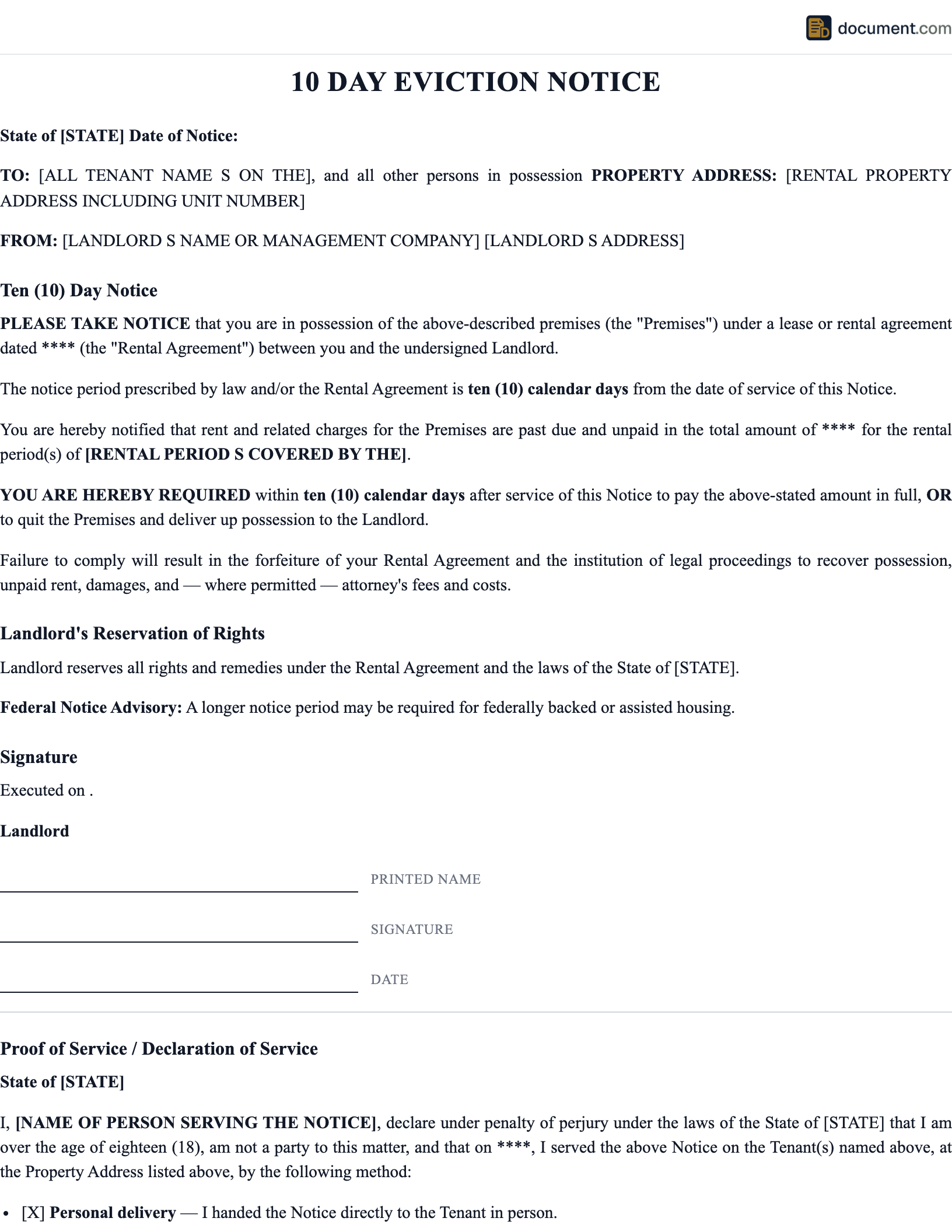
Below is a preview of a compliant Ohio 3-day notice for non-payment of rent. Our generator produces a notice tailored to Ohio's statutory requirements under ORC §1923.04.
THREE-DAY NOTICE TO PAY OR VACATE
STATE OF OHIO
Pursuant to ORC §1923.04
TO TENANT(S):
Name: [Full Legal Name]
Rental Address: [Ohio Property Address]
AMOUNT DUE:
Rent owed: [Amount]
Late fees: [Amount]
Total due: [Amount]
NOTICE
You have THREE (3) DAYS from service of this notice to pay the total amount due or vacate the premises. Failure to do so will result in the filing of a Forcible Entry and Detainer action in the appropriate Ohio Municipal Court.