



Massachusetts Eviction Overview
Massachusetts Requires 14 Days, Not 10
Massachusetts requires a 14-day Notice to Quit for non-payment of rent under M.G.L. Chapter 186, Section 11. There is no 10-day notice in Massachusetts law. For lease violations or no-fault terminations, a 30-day or full rental period notice applies. Using a 10-day notice instead of 14 will result in dismissal of your eviction case.
Massachusetts has one of the most complex and tenant-protective eviction frameworks in the United States. The process, called "Summary Process," is governed by M.G.L. Chapter 239 and is heard in specialized Housing Courts or in District Court. The state provides extensive defenses to tenants, including the warranty of habitability, strict security deposit rules, and protections against retaliatory and discriminatory evictions.
Landlords in Massachusetts must follow every procedural step precisely. The Notice to Quit must be properly formatted, properly served, and provide the correct notice period. After the notice expires, the landlord must file a Summary Process Summons and Complaint, serve it on a specific entry date (Mondays in most courts), and attend a hearing. Self-help evictions are illegal and carry severe penalties under M.G.L. Chapter 186, Section 14.
14 Days
Non-payment notice
$195
Housing Court filing
Very High
Tenant protections
6-12 wks
Full process
Massachusetts Notice Periods
| Grounds | Notice Period | Statute |
|---|---|---|
| Non-payment of rent | 14 days (cure period) | M.G.L. Ch. 186, §11 |
| Lease violation | 30 days or per lease terms | M.G.L. Ch. 186, §12 |
| Tenancy at will (no cause) | 30 days or one rental period | M.G.L. Ch. 186, §12 |
| End of fixed-term lease | 30 days before lease expiration | M.G.L. Ch. 186, §12 |
M.G.L. Chapter 186 Requirements
Critical: Security Deposit Compliance
Massachusetts has the strictest security deposit law in the nation (M.G.L. Ch. 186, §15B). If you failed to hold the deposit in a separate escrow account, provide receipts, or pay 5% annual interest, the tenant can counterclaim for triple damages. This can defeat your eviction case entirely. Verify your security deposit compliance before filing.
Notice to Quit Requirements
- Written Form: Must be a written notice. Massachusetts does not recognize oral notice to quit
- Correct Period: 14 days for non-payment; 30 days or one rental period for other grounds
- Specific Amount: For non-payment, state the exact amount of rent owed (do not include late fees unless lease authorizes them)
- Cure Right: The 14-day notice must clearly state the tenant can cure by paying within 14 days
- Proper Service: Hand delivery, leaving at last and usual place of abode, or certified mail
- No Waiver: Do not accept any rent payment after serving the notice, or you may waive it
How to Serve a Notice to Quit in Massachusetts
Massachusetts courts are strict about service of the Notice to Quit. Improper service is the most common reason eviction cases are dismissed in Housing Court.
Hand Delivery to Tenant
Deliver directly to the tenant in hand. Bring a witness. The 14-day period starts the next day
Leave at Last and Usual Place of Abode
If tenant is unavailable, leave at the unit in a conspicuous location. Many landlords also tape it to the door and photograph it
Wait Full 14 Days
Do not count the day of service. Wait the full 14 calendar days. Accept no rent during this period to avoid waiver
File Summary Process Complaint
After the notice expires, file at Housing Court or District Court. Must be filed for a Monday entry date. Serve the Summons and Complaint on the tenant at least 7 days before the entry date
Massachusetts Summary Process Timeline
Massachusetts evictions are among the slowest in the country. Even an uncontested non-payment eviction typically takes 6 to 8 weeks from the initial notice to physical removal. Contested cases with defenses can take 3 to 6 months or longer.
After the 14-day notice expires, the landlord files a Summary Process Summons and Complaint. The case is entered on a Monday (the "entry date"), and the tenant has until the following Thursday to file an Answer. The first hearing is typically 2 to 3 weeks after the entry date. If the court rules for the landlord, the tenant has 10 days to appeal. If no appeal is filed, the landlord requests an Execution (eviction order), which the constable must schedule.
Massachusetts Housing Courts actively encourage mediation and may offer tenants time to find alternative housing, especially during winter months. Many judges grant continuances for tenants who demonstrate they are seeking rental assistance or new housing.
Massachusetts Filing Fees & Costs
| Fee / Cost | Typical Amount |
|---|---|
| Summary Process Filing (Housing Court) | $195 |
| Constable Service of Summons | $40 - $80 |
| Execution (Eviction Order) | $75 - $150 |
| Constable Physical Eviction | $200 - $500 |
| Attorney Fees (if hired) | $1,500 - $4,000 |
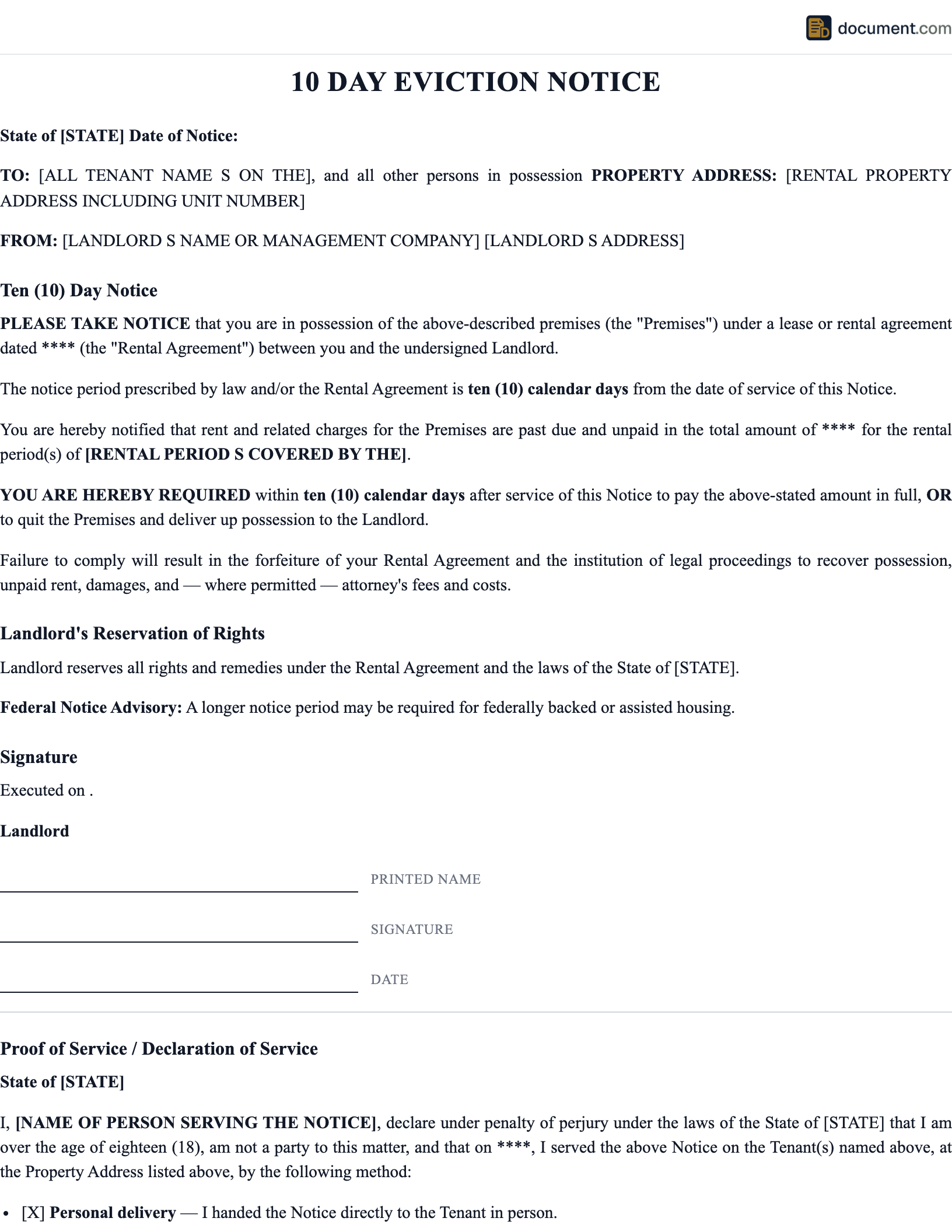
Sample Massachusetts Notice to Quit
Below is a preview of a Massachusetts-compliant 14-day Notice to Quit for non-payment, following M.G.L. Chapter 186, Section 11 requirements.
14-DAY NOTICE TO QUIT
COMMONWEALTH OF MASSACHUSETTS
Pursuant to M.G.L. Chapter 186, §11
TO THE TENANT(S):
Name(s): [Full Legal Name(s)]
Premises: [Full Address, Unit #, City, MA]
NOTICE:
You are hereby notified that you have fourteen (14) days from the date of this notice to pay the outstanding rent of $_____ or quit and surrender possession of the above premises. If you pay the full amount within 14 days, this notice is void.
MASSACHUSETTS LAW
This notice complies with M.G.L. Chapter 186, §11. Failure to comply may result in Summary Process proceedings under M.G.L. Chapter 239 in Housing Court or District Court.