



Georgia Eviction Notice Overview
Georgia's eviction law is governed by O.C.G.A. Title 44, Chapter 7. Unlike most states, Georgia does not mandate a specific number of days notice before a landlord can file for eviction. The only pre-suit requirement is a "demand for possession" -- a written notice demanding the tenant vacate. The demand can be served and an eviction filed almost immediately afterward.
This makes Georgia one of the most landlord-friendly states for evictions. However, many Georgia leases include contractual notice periods (such as 10 days) as a best practice. If your lease specifies a 10-day cure period, you must honor that contractual term before filing. Georgia's dispossessory actions are filed in Magistrate Court, with the highest volumes in Fulton County (Atlanta), DeKalb, Cobb, and Gwinnett counties.
None
Statutory wait period
Demand
For possession required
$55-$90
Filing fee
2-4 Wks
Uncontested timeline
Georgia's Demand for Possession
Georgia Has No Statutory Notice Period
Georgia only requires a demand for possession (O.C.G.A. §44-7-50), not a notice with a specific cure period. A 10-day notice is only required if your lease contractually mandates one. If your lease has no cure provision, you can file the dispossessory action after serving the demand with minimal delay.
The demand for possession serves as formal notice to the tenant that the landlord is seeking the return of the property. It should be in writing, state the reason the landlord wants possession, identify the property, and demand that the tenant vacate. While Georgia law does not require a specific waiting period after the demand, serving a demand and filing the same day is considered aggressive by most Georgia Magistrate Courts.
Best practice is to serve the demand and wait at least 3 to 5 days before filing, or comply with any notice period specified in the lease. If the lease requires 10 days notice for cure or vacate, the landlord must wait the full 10 days. Failure to comply with contractual notice terms is a valid defense the tenant can raise in Magistrate Court.
O.C.G.A. Requirements
Georgia's dispossessory process is governed by O.C.G.A. §44-7-50 through §44-7-55 and the Magistrate Court rules. Requirements include:
- Written Demand: A written demand for possession must be served on the tenant before filing the dispossessory affidavit
- Grounds Stated: The demand should state the reason for seeking possession (non-payment, lease violation, lease expiration, etc.)
- Dispossessory Affidavit: File a sworn affidavit in Magistrate Court stating the grounds for eviction and that a demand was served
- Service of Summons: The Magistrate Court summons must be served by the sheriff or marshal, giving the tenant 7 days to answer
- Lease Compliance: If the lease specifies a notice period, that contractual period must be followed before filing
- No Self-Help: Georgia prohibits self-help evictions under O.C.G.A. §44-7-14.1. Only a court-ordered writ can remove a tenant
How to Serve in Georgia
The demand for possession can be delivered by the landlord directly, but the court summons must be served by an authorized official.
Serve the Demand for Possession
Deliver the written demand to the tenant personally, by posting on the door, or by certified mail. Keep proof of delivery
Wait Any Contractual Period
If your lease requires 10 days (or any other period) for cure or notice, wait for that period to expire before filing
File Dispossessory Affidavit
File the sworn affidavit in Magistrate Court for the county where the property is located. Pay the filing fee ($55-$90)
Court Serves the Tenant
The sheriff or marshal serves the summons. The tenant has 7 days to file a written answer. If no answer, request default judgment
Hearing and Writ of Possession
If the tenant files an answer, a hearing is held within 14 days. If the landlord prevails, a writ of possession issues for enforcement
Georgia Magistrate Court Process
Georgia's dispossessory process through Magistrate Court is designed for efficiency. After the affidavit is filed, the court issues a summons giving the tenant 7 days to respond. Fulton County Magistrate Court (Atlanta) processes thousands of dispossessory cases annually, with dedicated dockets for eviction hearings.
If the tenant does not file an answer within 7 days, the landlord can obtain a default judgment. If the tenant answers, the court schedules a hearing within 14 days. At the hearing, both sides present evidence. The Magistrate Court judge issues a ruling, and if the landlord prevails, a Writ of Possession is issued.
The tenant has 7 days to appeal to Superior Court and must post a bond to stay execution of the writ. If no appeal is filed, the sheriff or marshal enforces the writ. In Fulton and DeKalb counties, writ enforcement can take 7 to 14 days due to scheduling. Total uncontested timeline: 2 to 4 weeks. Contested: 4 to 6 weeks.
Georgia Filing Fees & Costs
Fees for dispossessory actions in Georgia Magistrate Courts.
| Fee / Cost | Amount |
|---|---|
| Dispossessory Filing (Fulton Co.) | $76 |
| Dispossessory Filing (other counties) | $55 - $90 |
| Service of Process (Sheriff/Marshal) | $25 - $50 |
| Writ of Possession | $25 - $50 |
| Attorney Fees (if hired) | $500 - $2,000 |
Sample Georgia Demand for Possession
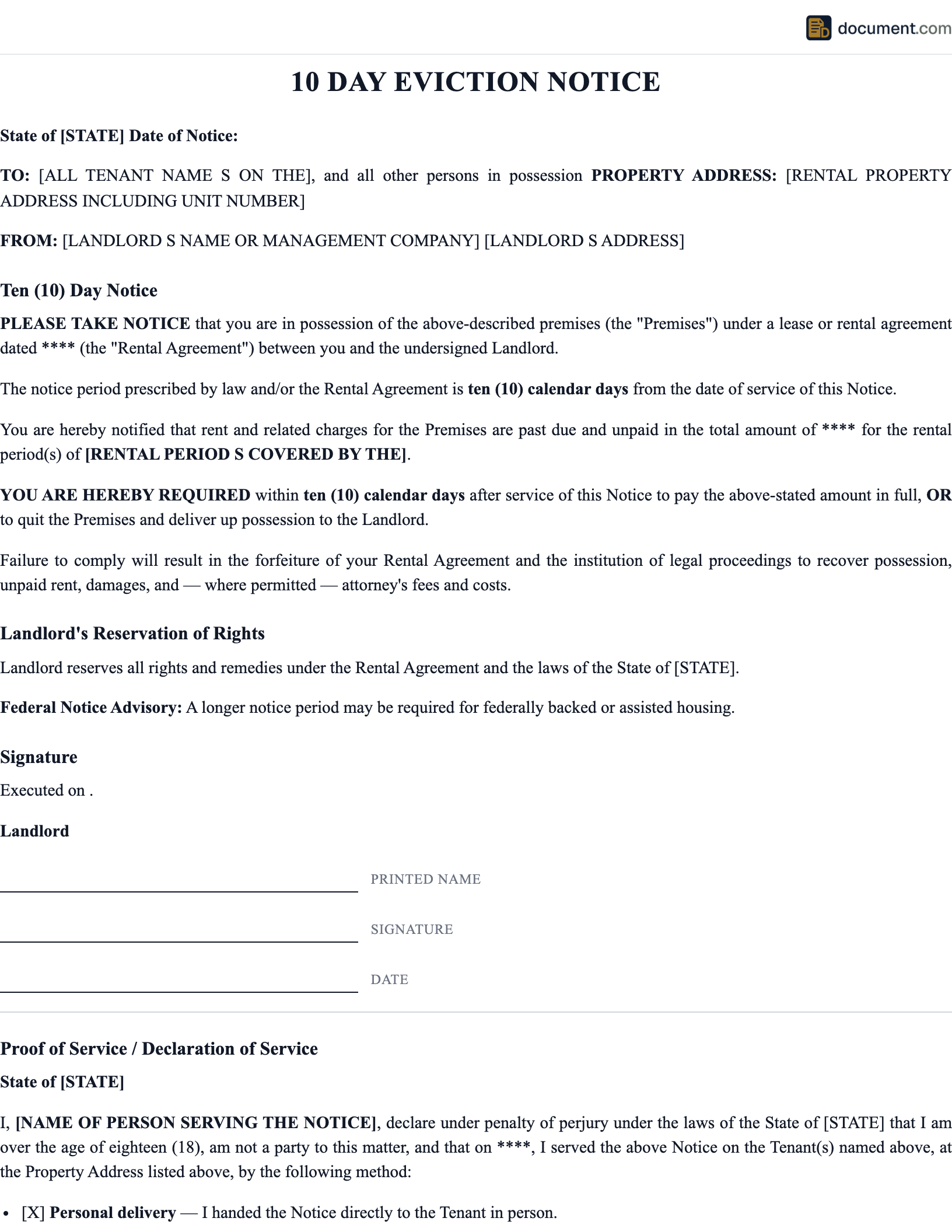
Below is a preview of a Georgia demand for possession. If your lease requires a 10-day cure period, include that timeframe in the demand.
DEMAND FOR POSSESSION
STATE OF GEORGIA
Pursuant to O.C.G.A. §44-7-50
TO TENANT(S):
Name: [Full Legal Name]
Property: [Georgia Property Address]
County: [Georgia County]
DEMAND:
You are hereby demanded to vacate and surrender possession of the above premises due to: [reason]. If possession is not surrendered, a dispossessory action will be filed in the [County] Magistrate Court.
NOTICE
Georgia law requires a demand for possession before filing for eviction. This demand serves as that required notice. If your lease provides a cure period, you have until the end of that period to remedy the issue.