



Connecticut Eviction Notice Overview
Connecticut's eviction system is governed by CGS Chapter 832 (the "Summary Process" statute) and uses a unique two-step process. First, the landlord serves a "Notice to Quit Possession," which is the formal notice terminating the tenancy. Second, after the Notice to Quit period expires, the landlord files a Summary Process action in Housing Court. Connecticut does not have a standard 10-day notice period for any eviction category.
The Notice to Quit period is 3 days for non-payment of rent, nuisance, and illegal activity, and 15 days for other lease violations. Connecticut's system is distinct because the Notice to Quit must be served by a State Marshal, constable, or "indifferent person" (someone not involved in the dispute). This makes Connecticut one of the strictest states for pre-suit notice service. The state's Housing Courts in Hartford, New Haven, Bridgeport, Waterbury, and New Britain handle the majority of eviction cases.
3 Days
Non-payment notice
15 Days
Lease violations
~$175
Filing fee
5-10 Wks
Typical timeline
Connecticut Notice Periods Explained
Connecticut Does Not Have a 10-Day Notice
Connecticut uses a 3-day Notice to Quit for non-payment (CGS §47a-23(a)) and a 15-day Notice to Quit for lease violations. There is no standard 10-day notice period in Connecticut law. If your lease includes a 10-day cure period, that is a contractual term that adds time on top of the statutory Notice to Quit requirements.
| Situation | Notice Period | Statute |
|---|---|---|
| Non-payment of rent | 3-day Notice to Quit | CGS §47a-23(a) |
| Lease violations (other) | 15-day Notice to Quit | CGS §47a-15 |
| Nuisance / illegal activity | 3-day Notice to Quit | CGS §47a-23(a) |
| Lapse of time (lease expiration) | 3-day Notice to Quit | CGS §47a-23(a) |
| Month-to-month termination | 3-day Notice to Quit | CGS §47a-23(a) |
CGS Chapter 832 Requirements
Connecticut's Notice to Quit has very specific requirements. Unlike most states where a landlord can simply mail or post a notice, Connecticut requires formal service of the Notice to Quit by an authorized person.
Notice to Quit Requirements
- Written Form: The Notice to Quit must be in writing and signed by the landlord or the landlord's attorney
- Proper Service: Must be served by a State Marshal, constable, or "indifferent person" per CGS §47a-23(a)
- Reason Stated: The notice must clearly state the reason for quitting (non-payment, violation, lapse of time, etc.)
- Quit Date: Must specify the date by which the tenant must vacate, calculated from the date of service
- Return of Service: The server must complete and file a return of service documenting how and when the notice was delivered
- Abode Service: If the tenant cannot be found, service can be made by leaving the notice at the tenant's usual place of abode
How to Serve a Notice in Connecticut
Connecticut is one of the strictest states for notice service. Unlike most states that allow landlords to personally deliver or mail a notice, Connecticut requires the Notice to Quit to be served by an authorized third party.
Prepare the Notice to Quit
Draft the Notice to Quit with the specific reason for termination. Connecticut Judicial Branch Form JD-HM-7 is available for this purpose
Hire a State Marshal or Constable
Connecticut requires service by a State Marshal, constable, or indifferent person. State Marshals charge approximately $35-$75 for service
Await the Notice Period
3 days for non-payment or 15 days for violations. The period begins the day after service. The server completes a return of service
File Summary Process Action
After the Notice to Quit period expires, file a Summary Process action in Housing Court or Superior Court with the return of service attached
Court Hearing and Execution
The court schedules a return date. If the landlord prevails, an Execution issues after a 5-day stay period. The State Marshal enforces it
Connecticut Housing Court Process
Connecticut's Housing Courts provide specialized eviction proceedings. After the Summary Process complaint is filed, the court assigns a return date (typically 2 to 3 weeks out). The Summary Process Summons and Complaint must be served by a State Marshal at least 5 days before the return date.
At the return date, if the tenant does not appear, the landlord can request a default judgment. If the tenant appears, the case may be referred to mediation (common in Hartford and New Haven Housing Courts). If mediation fails, a trial date is set. Connecticut's tenant redemption right (CGS §47a-35) allows tenants to pay all rent owed plus costs to stop the eviction at any point before judgment, once per 12-month period.
The total timeline in Connecticut is typically 5 to 10 weeks for uncontested cases. Contested cases in busy Housing Courts can take 3 to 6 months. After judgment, the Execution (writ of possession) is stayed for 5 days. The State Marshal then schedules the physical eviction, usually within 1 to 2 weeks of Execution issuance.
Connecticut Filing Fees & Costs
Fees for Connecticut eviction proceedings filed in Housing Court or Superior Court.
| Fee / Cost | Amount |
|---|---|
| Summary Process Filing Fee | $175 |
| State Marshal Service (Notice to Quit) | $35 - $75 |
| State Marshal Service (Summons) | $40 - $80 |
| Execution Enforcement (Marshal) | $100 - $300 |
| Attorney Fees (if hired) | $800 - $3,000 |
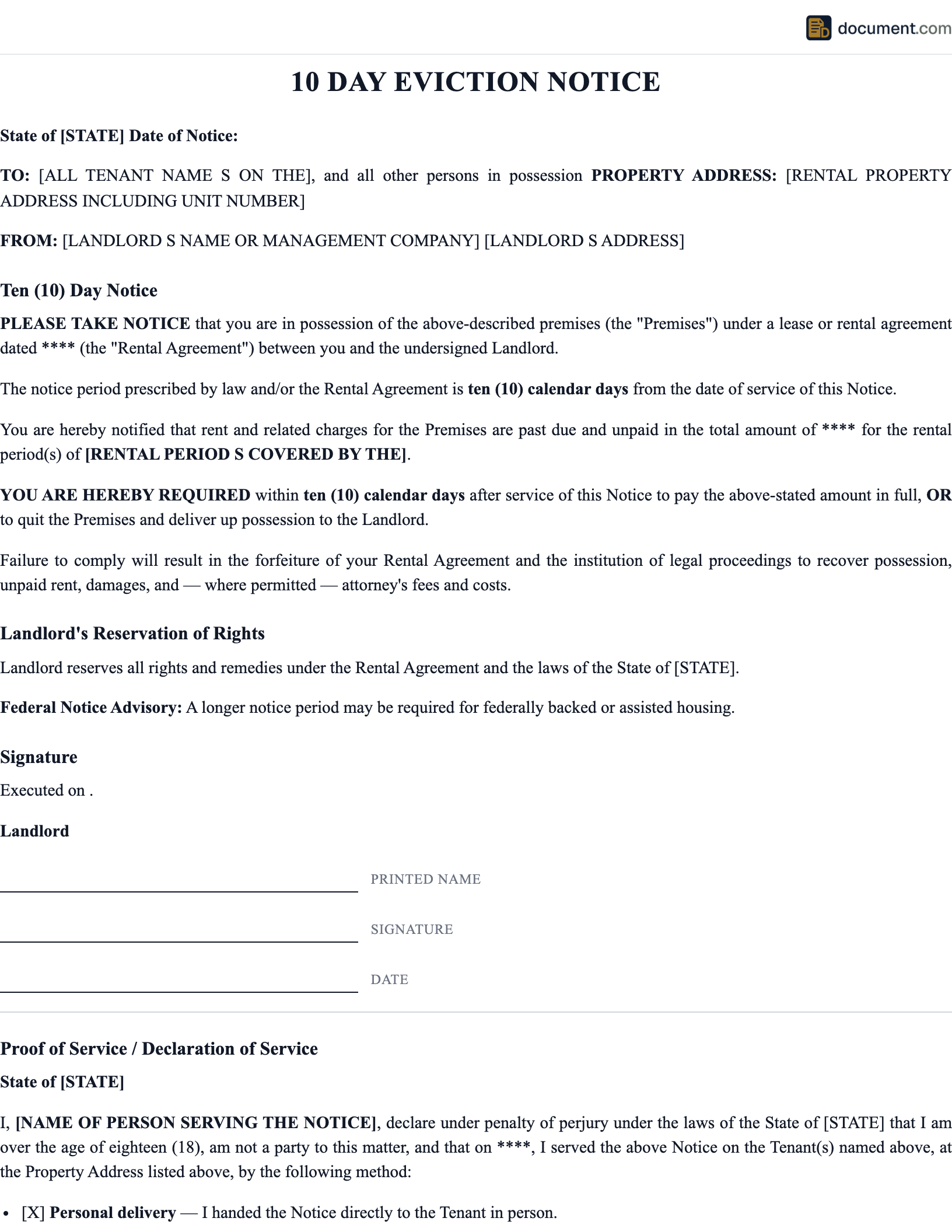
Sample Connecticut Notice to Quit
Below is a preview of a Connecticut Notice to Quit Possession. Note that Connecticut requires this notice to be served by a State Marshal, constable, or indifferent person under CGS §47a-23.
NOTICE TO QUIT POSSESSION
STATE OF CONNECTICUT
Pursuant to CGS §47a-23
TO TENANT(S):
Name: [Full Legal Name]
Premises: [Connecticut Property Address]
REASON FOR NOTICE:
I hereby give you notice to quit possession of the above premises on or before [date] for the following reason: [non-payment / violation / lapse of time].
SERVICE REQUIREMENT
This notice must be served by a Connecticut State Marshal, constable, or indifferent person. Self-service by the landlord does not satisfy CGS §47a-23.