



Colorado 10-Day Eviction Notice Overview
Colorado underwent a fundamental shift in its eviction law with the passage of HB21-1121 in 2021. Previously, Colorado was a 3-day notice state for non-payment, making it one of the fastest eviction states in the country. The new law changed the notice period to 10 days for non-payment under C.R.S. §13-40-104(1)(d.5), aligning Colorado with states that provide more time for tenants to resolve rent defaults before facing court proceedings.
The 10-day notice is now the standard for both non-payment of rent and substantial lease violations in Colorado. This makes the state unique among 10-day notice states because many others only use 10 days for one category of violations. Colorado's FED (Forcible Entry and Detainer) process through County Court provides for expedited proceedings, but the combined effect of the longer notice period and expanded tenant defenses means the overall timeline is longer than pre-2021.
10 Days
Non-payment & violations
HB21-1121
Key reform law
~$85
FED filing fee
3-5 Wks
Average timeline
HB21-1121: Colorado's 2021 Eviction Reforms
Critical: Post-2021 Requirements
Any 10-day notice served in Colorado must comply with HB21-1121 requirements. Notices that use the old 3-day period or that lack the required tenant rights language will be rejected by Colorado County Courts. Ensure your notice template has been updated for the current law.
HB21-1121 (the "Concerning the Procedures Related to Residential Evictions" bill) was signed by Governor Polis on June 28, 2021, and took effect October 1, 2021. Key changes include:
- 10-Day Non-Payment Period: Replaced the old 3-day notice with a 10-day demand for compliance or possession (C.R.S. §13-40-104(1)(d.5))
- Mandatory Cure Language: The notice must inform the tenant that paying the full amount owed within 10 days stops the eviction
- Rental Assistance Protection: Tenants who have applied for rental assistance and can document a pending application have additional protections
- Late Fee Limits: Late fees cannot exceed a "reasonable" amount, and the notice must specify exact amounts owed
- Lease Violation Cure Period: 10-day cure period for substantial lease violations under C.R.S. §13-40-104(1)(e.5)
C.R.S. Notice Requirements
Colorado's notice requirements are more detailed than many states due to the HB21-1121 reforms. The notice must contain specific elements to be valid in County Court.
Required Notice Elements
- Exact Amount Owed: For non-payment notices, state the precise dollar amount of rent and any applicable late fees
- 10-Day Cure Period: Clearly state the tenant has 10 days to pay in full or cure the violation
- Tenant Rights Information: Include language informing the tenant of the right to cure and available legal resources (required by HB21-1121)
- Payment Instructions: How and where the tenant can make payment to cure the default
- Full Property Address: Complete address including unit number, city, and Colorado county
- Landlord Contact: Name, address, and phone number for the landlord or management company
How to Serve a 10-Day Notice in Colorado
Colorado law under C.R.S. §13-40-108 specifies the methods for serving eviction notices. Proper service is a prerequisite for the County Court to accept the FED filing.
Personal Service
Hand-deliver the notice directly to the tenant. The 10-day period begins the day after service. This is the most reliable method for Colorado courts
Post and Mail
Post the notice on the front door of the unit AND mail a copy via first-class mail. This is the most common method in Denver metro FED cases
Include HB21-1121 Language
Ensure the notice includes required tenant rights disclosures, rental assistance information, and exact payment amounts as mandated by the 2021 law
Document and Wait
Retain proof of service (photographs, mail receipts, witness statements). Wait the full 10 days before filing the FED complaint in County Court
File FED in County Court
File the Forcible Entry and Detainer complaint in the County Court where the property is located. Attach the notice and proof of service
Colorado FED Court Process & Timeline
After the 10-day notice period expires, the Colorado FED process moves through County Court. Denver County Court has dedicated FED dockets given the high volume of cases. The process is designed to be faster than standard civil litigation but has become longer since HB21-1121.
The court issues a summons that must be served on the tenant at least 7 days before the return date. At the FED hearing, both parties present evidence. If the landlord prevails, the court enters a judgment for possession. The tenant has 48 hours to vacate after the judgment is entered (unless the court orders otherwise). If the tenant does not leave, the landlord obtains a Writ of Restitution, and the sheriff enforces it.
In Denver, the total timeline from serving the 10-day notice to sheriff lockout typically runs 3 to 5 weeks for uncontested cases. Contested cases, especially those involving habitability defenses or rental assistance delays, can take 6 to 10 weeks. Colorado Springs (El Paso County) and Boulder County typically have similar timelines.
Colorado Filing Fees & Costs
FED filing fees are set by the Colorado Judicial Department. Below are current costs for eviction proceedings in Colorado County Courts.
| Fee / Cost | Amount |
|---|---|
| FED Complaint Filing Fee | $85 |
| Service of Process (Sheriff) | $35 - $65 |
| Writ of Restitution | $40 - $75 |
| Attorney Fees (if hired) | $700 - $2,500 |
| Sheriff Lockout | $75 - $200 |
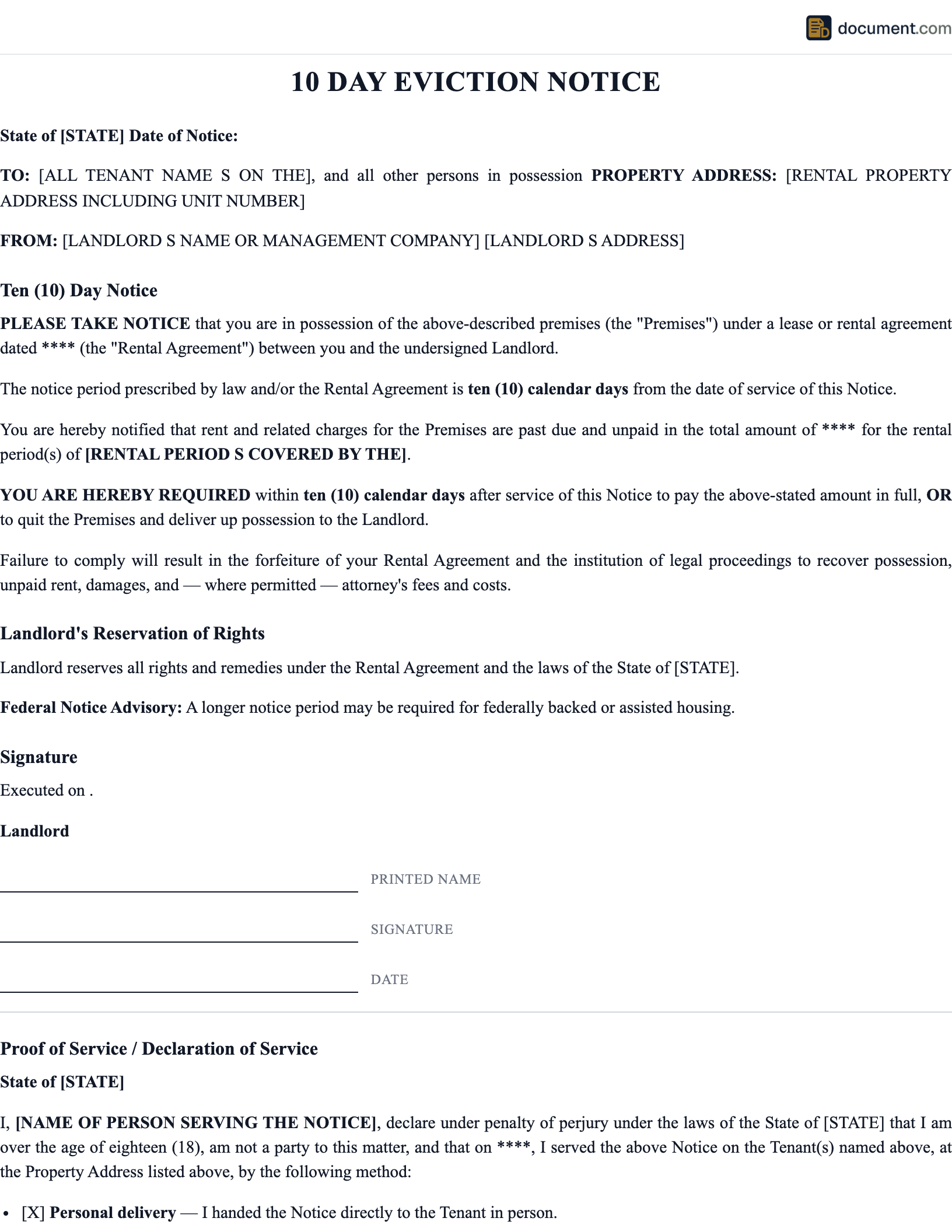
Sample Colorado 10-Day Eviction Notice
Below is a preview of an HB21-1121-compliant 10-day demand for compliance or possession. This template includes the required tenant rights language and payment cure provisions.
10-DAY DEMAND FOR COMPLIANCE OR POSSESSION
STATE OF COLORADO
C.R.S. §13-40-104(1)(d.5) / HB21-1121
TO TENANT(S):
Name: [Full Legal Name]
Property: [Colorado Property Address]
AMOUNT OWED / VIOLATION:
Total rent due: $[amount]
Late fees (if applicable): $[amount]
Total amount to cure: $[total]
DEMAND:
You must pay the total amount owed or cure the violation within TEN (10) DAYS of service of this notice, or surrender possession of the premises. If you pay in full within 10 days, this notice is void and your tenancy continues.
YOUR RIGHTS (HB21-1121)
You have the right to cure this default by paying the full amount within 10 days. If you have applied for rental assistance, you may have additional protections. Contact Colorado Legal Services at 1-888-264-5460 for free legal advice.