



California Eviction Notice Overview
California has one of the most complex and tenant-protective eviction frameworks in the United States. The primary eviction notice is the 3-day notice governed by Code of Civil Procedure (CCP) §1161, not a 10-day notice. California's unlawful detainer process is filed in Superior Court, and the state's Tenant Protection Act of 2019 (AB 1482, codified at Civil Code §1946.2) requires just-cause for evicting most long-term tenants.
A 10-day notice is uncommon in California but may arise in specific circumstances: subsidized housing programs (Section 8, LIHTC) that mandate longer notice periods under federal regulations, lease agreements that provide 10-day cure periods for specific violations, or local ordinances that extend notice requirements beyond the state minimum. Many California cities, including Los Angeles, San Francisco, Oakland, Berkeley, and San Jose, have local rent stabilization ordinances that impose additional notice requirements and just-cause protections beyond state law.
3 days
Standard notice
~$385
UD filing fee
Superior
Court type
5-12 wks
Typical timeline
California Notice Periods Under the CCP
California's Code of Civil Procedure prescribes specific notice periods. Using the wrong notice type is one of the most common reasons unlawful detainer cases are dismissed.
| Grounds | Notice | Statute |
|---|---|---|
| Non-payment of rent | 3 days | CCP §1161(2) |
| Lease violation (curable) | 3 days | CCP §1161(3) |
| Nuisance / illegal use | 3 days (no cure) | CCP §1161(4) |
| No-cause (under 1 year) | 30 days | Civil Code §1946.1 |
| No-cause (over 1 year) | 60 days | Civil Code §1946.1 |
California Unlawful Detainer Requirements
California Superior Courts apply extremely strict standards to eviction notices. Los Angeles and San Francisco courts, in particular, regularly dismiss cases for technical deficiencies.
Rent-Only Rule for 3-Day Notices
Under CCP §1161(2), a 3-day notice to pay rent or quit must state only the amount of rent due. Including late fees, utility charges, NSF fees, or any other charges invalidates the entire notice. California appellate courts have consistently held that even a $1 overstatement renders the notice defective. If you need to collect other amounts, pursue them separately. This is the single most common reason California eviction cases are dismissed.
Required Notice Contents
- Tenant Names: All tenants named on the lease must be listed individually
- Property Address: Complete address including apartment/unit number, city, and zip code
- Rent Amount Only: For pay-or-quit notices, state the exact rent owed with no additional charges
- Payment Method: Specify where and how rent can be paid (name, address, business hours)
- AB 1482 Compliance: If the tenant has resided for 12+ months, include the just-cause reason and applicable Civil Code section
- Local Ordinance Compliance: For rent-controlled units, include required local language (LA RSO, SF Rent Ordinance, etc.)
Service Methods Under CCP §1162
California prescribes three specific methods for serving eviction notices under CCP §1162. Improper service is the second most common reason for UD dismissal after defective notices.
Personal Service (CCP §1162(a)(1))
Hand-deliver the notice to the tenant personally. Use a registered process server or adult non-party. Prepare a proof of service declaration. This is the strongest and most preferred method.
Substituted Service (CCP §1162(a)(2))
If the tenant cannot be found at home or work after reasonable diligence, leave the notice with a competent adult at the property AND mail a copy via first-class mail. The notice period starts the day after mailing.
Post and Mail (CCP §1162(a)(3))
Only if personal and substituted service fail after reasonable diligence: post the notice in a conspicuous place on the property AND mail a copy via first-class mail. Document all prior attempts at personal service.
File Unlawful Detainer in Superior Court
After the notice period expires, file a UD complaint in the Superior Court of the county where the property is located. The filing fee is approximately $385. Attach the notice and proof of service.
California Superior Court Eviction Timeline
California's unlawful detainer process is faster than a regular civil lawsuit but still one of the slowest eviction processes in the country due to extensive tenant protections.
After filing, the UD summons and complaint must be served on the tenant, who has 5 calendar days to respond. If the tenant files an answer, either party can request a trial within 20 days. Jury trials are available upon request. In Los Angeles County, UD trials may take 30-45 days to schedule due to court congestion. After judgment, the clerk issues a Writ of Possession, and the sheriff posts a 5-day notice to vacate before executing the lockout.
Uncontested evictions in California typically take 5-8 weeks from notice to lockout. Contested cases can take 8-16 weeks, and cases with jury trial requests or appeals can extend to 4-6 months. In San Francisco, the timeline is often longer due to mandatory mediation requirements and the Rent Board process. COVID-era protections have expired, but some local emergency ordinances may still provide additional time for certain tenants.
California Filing Fees & Costs
California has some of the highest eviction costs in the country. Los Angeles, San Francisco, and San Diego are particularly expensive due to attorney fees and court congestion.
| Fee / Cost | Typical Amount |
|---|---|
| UD Filing Fee (Limited Civil) | $385 |
| Process Server | $50 - $150 |
| Attorney Fees | $1,500 - $5,000+ |
| Writ of Possession | $40 - $75 |
| Sheriff Lockout | $125 - $250 |
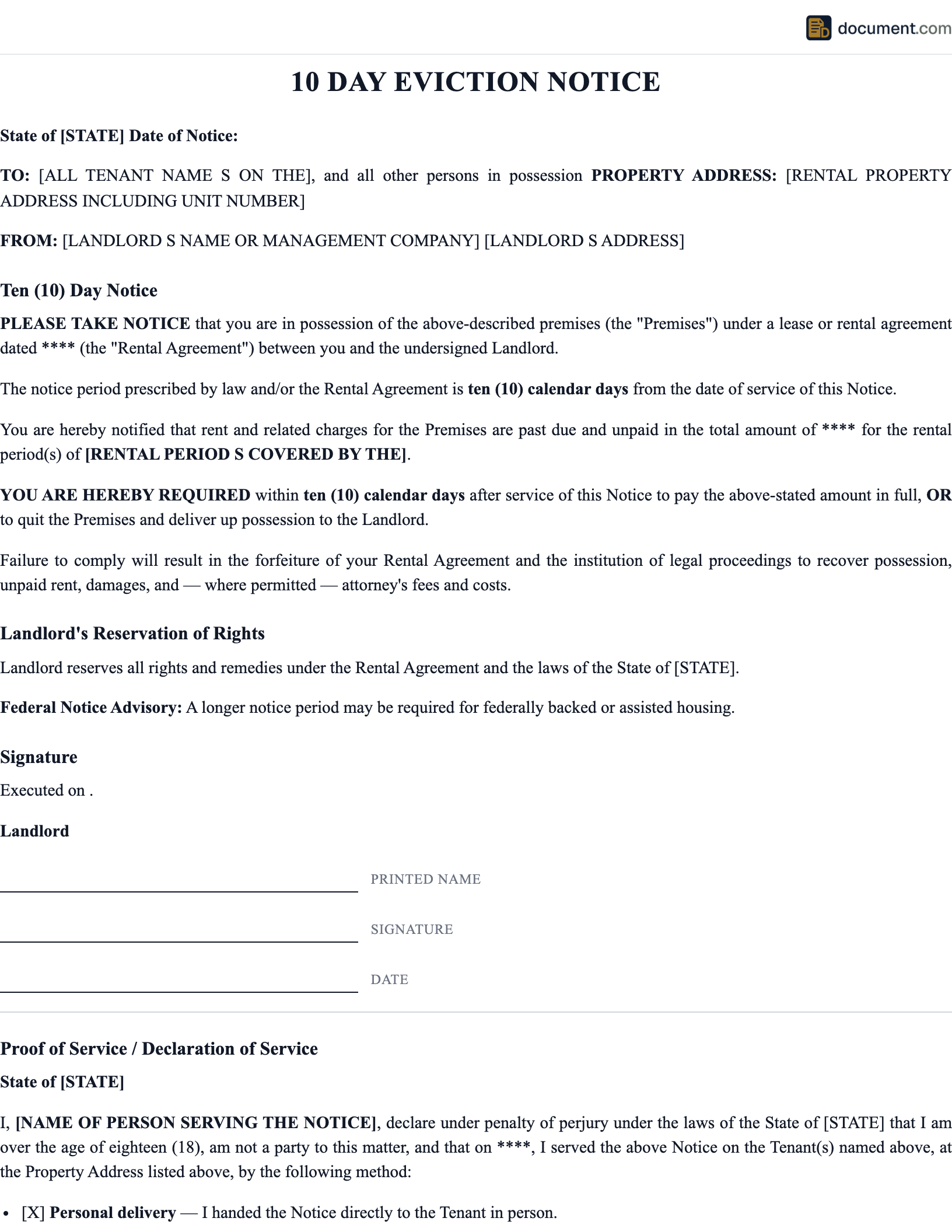
Sample California Eviction Notice
Below is a preview of a California eviction notice. Your version will include the correct notice period and all required disclosures based on your property location and tenant situation.
3-DAY NOTICE TO PAY RENT OR QUIT
STATE OF CALIFORNIA
Pursuant to CCP §1161(2)
LANDLORD:
Name: [Full Legal Name]
Address: [California Address]
TENANT(S):
Name: [All Tenants Named on Lease]
Premises: [Rental Property Address]
SUPERIOR COURT JURISDICTION:
County: [Los Angeles, SF, etc.]
Local Ordinance: [RSO / Rent Board if applicable]
CALIFORNIA COMPLIANCE
This notice complies with CCP §1161, the Tenant Protection Act (AB 1482), and applicable local rent stabilization ordinances.