



Alaska 10-Day Eviction Notice Overview
Alaska's eviction notice system operates under the Uniform Residential Landlord and Tenant Act (AS 34.03), which distinguishes between two primary notice periods. A 7-day notice is required for non-payment of rent under AS 34.03.220(b), while a 10-day notice applies to material lease violations under AS 34.03.220(a)(2). This distinction is critical because using the wrong notice period can invalidate the eviction and force the landlord to restart the process.
The 10-day notice gives the tenant an opportunity to cure the violation or vacate the premises. Common violations that trigger a 10-day notice include unauthorized pets, excessive noise or disturbances, unauthorized occupants, damage beyond normal wear and tear, illegal activity, or violations of health and safety codes. Alaska's unique geography and climate mean that certain violations, such as failure to maintain heating systems in winter or improper waste disposal in rural areas, carry particular weight in court proceedings.
10 Days
Lease violations
7 Days
Non-payment of rent
$75
FED filing fee
3-6 Wks
Typical timeline
When Alaska Uses a 10-Day Notice
Understanding when the 10-day notice period applies versus other Alaska notice periods is essential for compliance. Using the wrong notice type is one of the most frequent reasons Alaska courts dismiss eviction cases.
| Situation | Notice Period | Statute |
|---|---|---|
| Material lease violation (first offense) | 10 days to cure or vacate | AS 34.03.220(a)(2) |
| Non-payment of rent | 7 days to pay or vacate | AS 34.03.220(b) |
| Repeat violation within 6 months | 5 days unconditional quit | AS 34.03.220(a)(1) |
| Illegal drug activity | 24 hours unconditional quit | AS 34.03.300 |
| Month-to-month termination | 30 days | AS 34.03.290(b) |
Alaska Statutory Requirements (AS 34.03)
Alaska's Uniform Residential Landlord and Tenant Act sets out specific requirements for eviction notices. The Alaska Court System provides Form CIV-720 for Forcible Entry and Detainer actions, and landlords should ensure their pre-suit notices contain all required elements.
Alaska-Specific Warning
Alaska courts require strict compliance with AS 34.03.220 notice requirements. A 10-day notice served for non-payment of rent (which should be a 7-day notice) will be dismissed. Similarly, a notice that does not specifically identify the lease violation and the corresponding lease provision can be ruled insufficient. In remote areas of Alaska where mail delivery is slow, courts may require additional time if service is by mail under Alaska Civil Rule 6(e).
Notice Content Requirements
- Tenant Identification: Full legal names of all tenants on the lease, matching the names on the rental agreement
- Property Address: Complete physical address of the rental unit, including apartment number, city, and borough
- Specific Violation: Detailed description of the material lease violation and the exact lease provision breached under AS 34.03.220(a)(2)
- Cure-or-Quit Language: Clear statement that the tenant has 10 days to either remedy the violation or surrender possession
- Repeat Violation Warning: Statement that a substantially similar violation within 6 months may result in a 5-day unconditional quit notice
- Landlord Contact: Name, mailing address, and phone number of the landlord or property manager as required by AS 34.03.080
How to Serve a 10-Day Notice in Alaska
Alaska Statute 34.03.260 governs how eviction notices must be delivered. In a state where some rental properties are accessible only by bush plane or ferry, service methods carry special considerations that differ from the lower 48 states.
Personal Delivery (Preferred)
Hand the notice directly to the tenant. This is the strongest method and starts the 10-day clock immediately. Have a witness present or use a process server
Substitute Service
Leave the notice with a person of suitable age and discretion at the tenant's dwelling unit per AS 34.03.260(a)
Post and Mail
If personal and substitute service fail, post the notice conspicuously on the dwelling unit door AND mail a copy via first-class mail. Add 3 days for mailing under Civil Rule 6(e)
Create a Proof of Service
Document the date, time, method, and witness. Alaska District Courts will require a certificate of service or affidavit when you file the FED complaint
Wait the Full 10-Day Period
The 10-day period begins the day after service. If it ends on a weekend or state holiday, it extends to the next business day. Do not file a FED complaint before the period expires
Alaska Eviction Timeline & Court Process
After the 10-day notice expires without cure or vacancy, the landlord files a Forcible Entry and Detainer (FED) action in Alaska District Court. Alaska uses the FED procedure outlined in AS 09.45.060-160, which provides for expedited proceedings compared to standard civil litigation.
The FED summons gives the tenant only 2 days to respond (Alaska District Court Civil Rule 12), making this one of the shortest response periods in the country. A hearing is typically scheduled within 10 to 15 days of filing. The court can grant immediate possession if the tenant fails to appear. If the tenant contests the eviction, the judge hears evidence from both sides at the hearing.
Following a judgment for the landlord, the court issues a Writ of Assistance. The tenant typically has 2 to 5 days to vacate voluntarily. If they refuse, Alaska State Troopers or local police (depending on jurisdiction) will enforce the writ. In remote Alaskan communities, enforcement timing may vary based on law enforcement availability, particularly in areas served by Village Public Safety Officers (VPSOs).
Alaska Filing Fees & Costs
Alaska eviction costs are set by the Alaska Court System Administrative Bulletin. Below are current fees for FED actions filed in Alaska District Court.
| Fee / Cost | Amount |
|---|---|
| FED Complaint Filing Fee | $75 |
| Service of Process (State Troopers / private) | $40 - $100 |
| Writ of Assistance | $25 - $50 |
| Attorney Fees (if hired) | $800 - $3,000 |
| Lockout Enforcement | $100 - $300 |
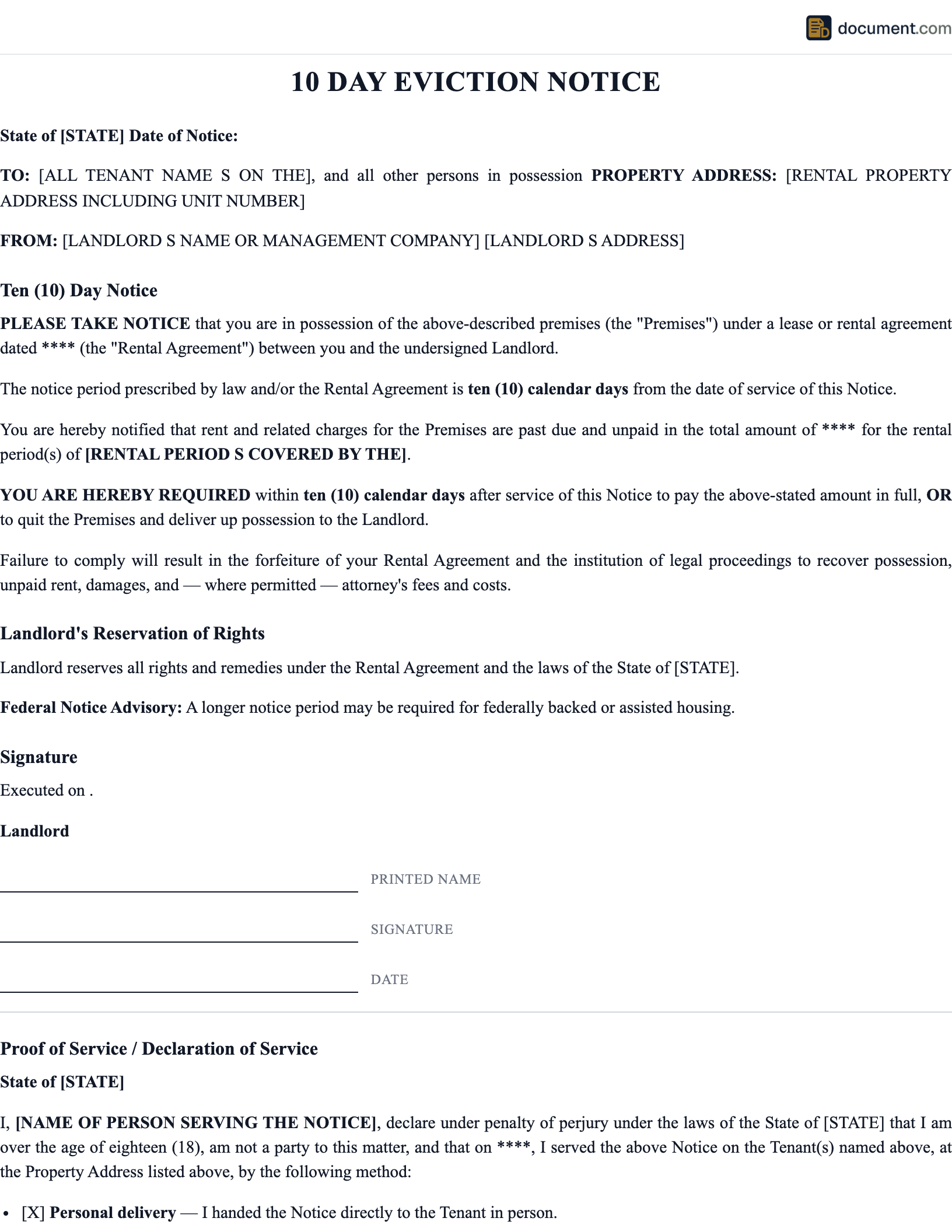
Sample Alaska 10-Day Eviction Notice
Below is a preview of an Alaska-compliant 10-day lease violation notice under AS 34.03.220(a)(2). This template includes the cure-or-quit language and repeat-violation warning required under Alaska's URLTA.
10-DAY NOTICE TO CURE OR VACATE
STATE OF ALASKA
Pursuant to AS 34.03.220(a)(2)
TO TENANT(S):
Name: [Full Legal Name]
Address: [Alaska Property Address]
LEASE VIOLATION:
You are in material noncompliance with your rental agreement. Specifically, you have violated Section [Section #] of your lease by [describe violation].
NOTICE:
You have TEN (10) DAYS from the date of service of this notice to cure the above violation or surrender possession of the premises. If the violation is not remedied within 10 days, your rental agreement will terminate and eviction proceedings will be initiated.
WARNING (AS 34.03.220(a)(1))
If a substantially similar violation occurs within six (6) months of this notice, you may receive a five (5) day unconditional notice to vacate with no opportunity to cure.