



Alabama Eviction Notice Overview
Alabama's eviction framework is primarily governed by the Alabama Uniform Residential Landlord and Tenant Act (AURLTA), codified at Ala. Code §35-9A-101 through §35-9A-603. Enacted in 2006, AURLTA modernized Alabama's landlord-tenant laws and established mandatory notice periods that differ from the 10-day standard used in some other states. Under AURLTA, non-payment of rent requires only a 7-day notice, while material lease violations call for a 14-day notice with an opportunity to cure.
A 10-day notice period may still be relevant for properties that fall outside AURLTA's coverage, such as single-family homes where the landlord owns fewer than three rental properties, or where the lease specifically provides for a 10-day cure period. Alabama District Courts handle all eviction proceedings, and the process from notice to enforcement typically takes 4-8 weeks depending on whether the tenant contests the case.
7 / 14
Day notice (AURLTA)
$268
Filing fee
District
Court type
4-8 wks
Typical timeline
Alabama Notice Periods Under AURLTA
Understanding which notice period applies is critical because using the wrong one will result in dismissal of your eviction case. Alabama's notice requirements depend on the reason for eviction and whether the property falls under AURLTA.
| Eviction Reason | Notice Period | Statute |
|---|---|---|
| Non-payment of rent | 7 days | §35-9A-421(b) |
| Material lease violation | 14 days (with cure right) | §35-9A-421(a) |
| Clear and present danger | 7 days (no cure) | §35-9A-421(a) |
| Drug activity on premises | 7 days (no cure) | §35-9A-421(a) |
| Month-to-month termination | 30 days | §35-9A-441 |
Alabama Legal Requirements
Alabama District Courts require strict compliance with notice procedures. A defective notice is the most common reason eviction cases are dismissed, costing landlords time and additional filing fees.
AURLTA Coverage Check
Before serving any eviction notice in Alabama, determine whether AURLTA applies to your property. AURLTA covers most residential rentals but exempts: (1) single-family homes where the landlord owns fewer than three rental properties, (2) transient occupancy in hotels/motels, (3) residence at institutions, and (4) occupancy by employees whose right to occupy is conditional on employment. If AURLTA does not apply, your lease terms and Alabama common law govern notice requirements.
Required Notice Contents
- Tenant Identification: Full legal names of all tenants listed on the lease agreement
- Property Address: Complete street address including unit number and county
- Specific Violation: For non-payment, the exact dollar amount owed including any applicable late fees; for lease violations, the specific lease clause breached and the nature of the violation
- Cure Period: The correct number of days (7 for non-payment, 14 for violations under AURLTA) and a clear statement that the tenant may cure within that period
- Consequence Statement: A statement that failure to cure or vacate will result in the landlord filing an eviction action in District Court
- Landlord Contact: Landlord or property manager name, mailing address, and phone number as required by AURLTA §35-9A-202
How to Serve an Eviction Notice in Alabama
Alabama law permits several methods of service for eviction notices. Under AURLTA §35-9A-301, notices are considered delivered when they are actually received by the tenant. The safest approach is to use a method that creates a clear record of delivery.
Personal Hand Delivery
Deliver the notice directly to the tenant. Bring an adult witness who can later testify to the date, time, and manner of delivery. Have the witness sign a certificate of service.
Certified Mail with Return Receipt
Send the notice via USPS certified mail with return receipt requested. The notice period begins when the tenant signs for the letter, not when it is mailed. Keep the green card as proof.
Post and Mail (If Tenant Unavailable)
If the tenant cannot be found, post the notice conspicuously on the main entrance of the dwelling unit and mail a copy via first-class mail. Document the posting with a timestamped photograph.
File in District Court After Expiration
If the tenant does not cure or vacate, file an Unlawful Detainer complaint in the District Court of the county where the property is located. Attach a copy of the notice and proof of service to your complaint.
Alabama District Court Eviction Timeline
Alabama eviction proceedings move through the District Court system. After the notice period expires without cure or vacancy, the landlord initiates a formal Unlawful Detainer action. Understanding each step helps set realistic expectations for property recovery.
Once the complaint is filed, the court clerk issues a summons to the tenant, who has 14 days to file a written answer. If no answer is filed, the landlord may request a default judgment. If the tenant answers, the court schedules a hearing, typically within 14-30 days. At trial, both sides present evidence. If the landlord prevails, the court issues a Writ of Possession, and the county sheriff executes the removal, usually within 7-10 days of the writ being issued.
Tenants in Alabama can appeal a District Court eviction ruling to Circuit Court within 14 days, which can add 2-4 months to the process. During appeal, the tenant may be required to post a bond or continue paying rent into the court registry. Contested evictions in Jefferson County (Birmingham) and Madison County (Huntsville) tend to take longer due to higher caseloads.
Alabama Eviction Fees & Costs
Below are the typical costs associated with an eviction proceeding in Alabama District Court. Jefferson County and Mobile County may have slightly different fee schedules.
| Fee / Cost | Typical Amount |
|---|---|
| District Court Filing Fee | $268 |
| Service of Process (Sheriff) | $25 - $50 |
| Attorney Fees (if hired) | $750 - $2,500 |
| Writ of Possession | $50 - $100 |
| Sheriff Lockout Execution | $75 - $200 |
| Circuit Court Appeal Filing | $300 - $400 |
Sample Alabama Eviction Notice
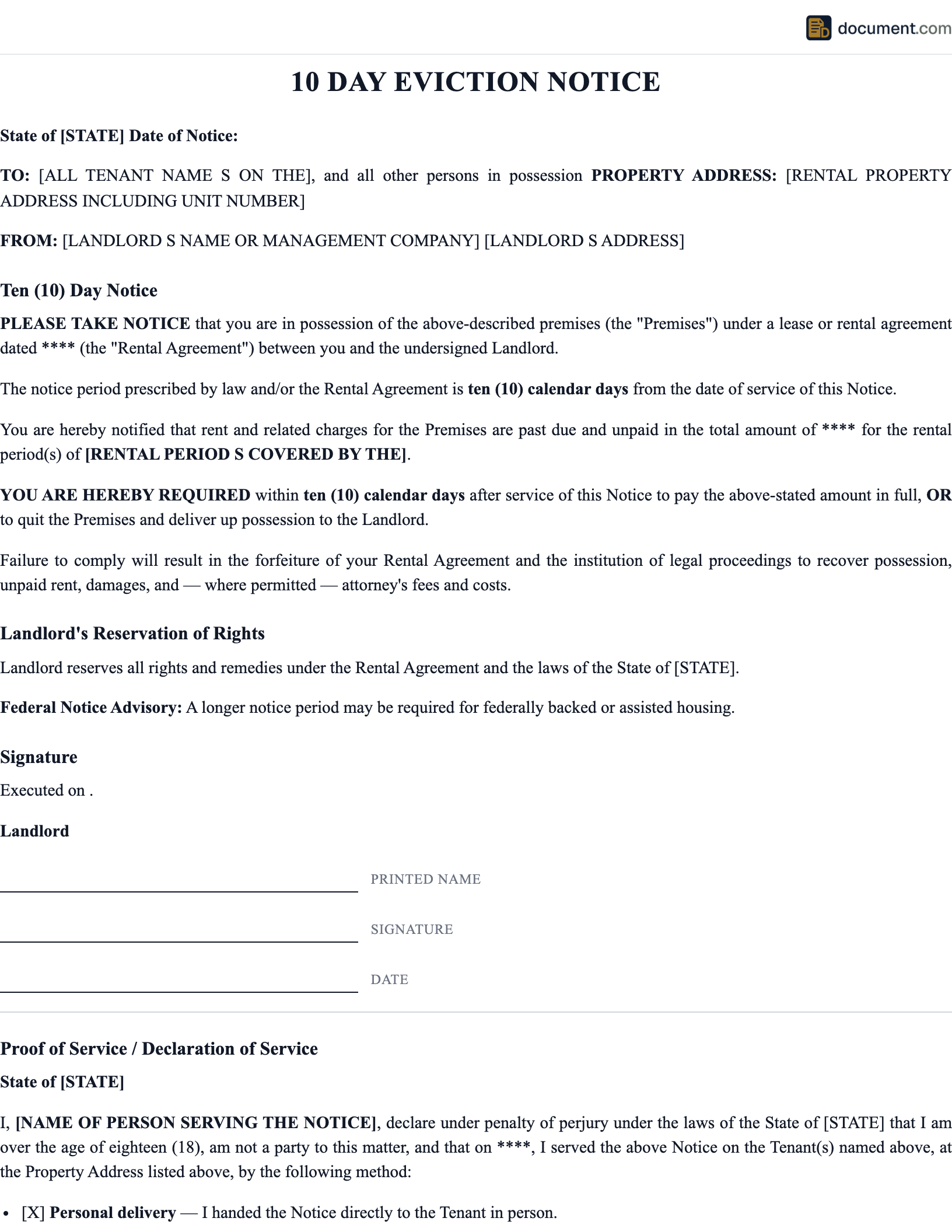
Below is a preview of an Alabama-specific eviction notice. Your customized document will include the correct notice period based on whether your property falls under AURLTA and the specific grounds for eviction.
NOTICE TO CURE OR VACATE
STATE OF ALABAMA
Pursuant to Ala. Code §35-9A-421
LANDLORD / PROPERTY OWNER:
Name: [Full Legal Name]
Address: [Alabama Address]
TENANT(S):
Name: [All Tenants Named on Lease]
Premises: [Rental Property Address]
COUNTY & DISTRICT COURT JURISDICTION:
County: [Alabama County]
District Court: [Court District]
ALABAMA COMPLIANCE
This notice complies with the Alabama Uniform Residential Landlord and Tenant Act (AURLTA) and includes all provisions required for District Court proceedings in Alabama.