
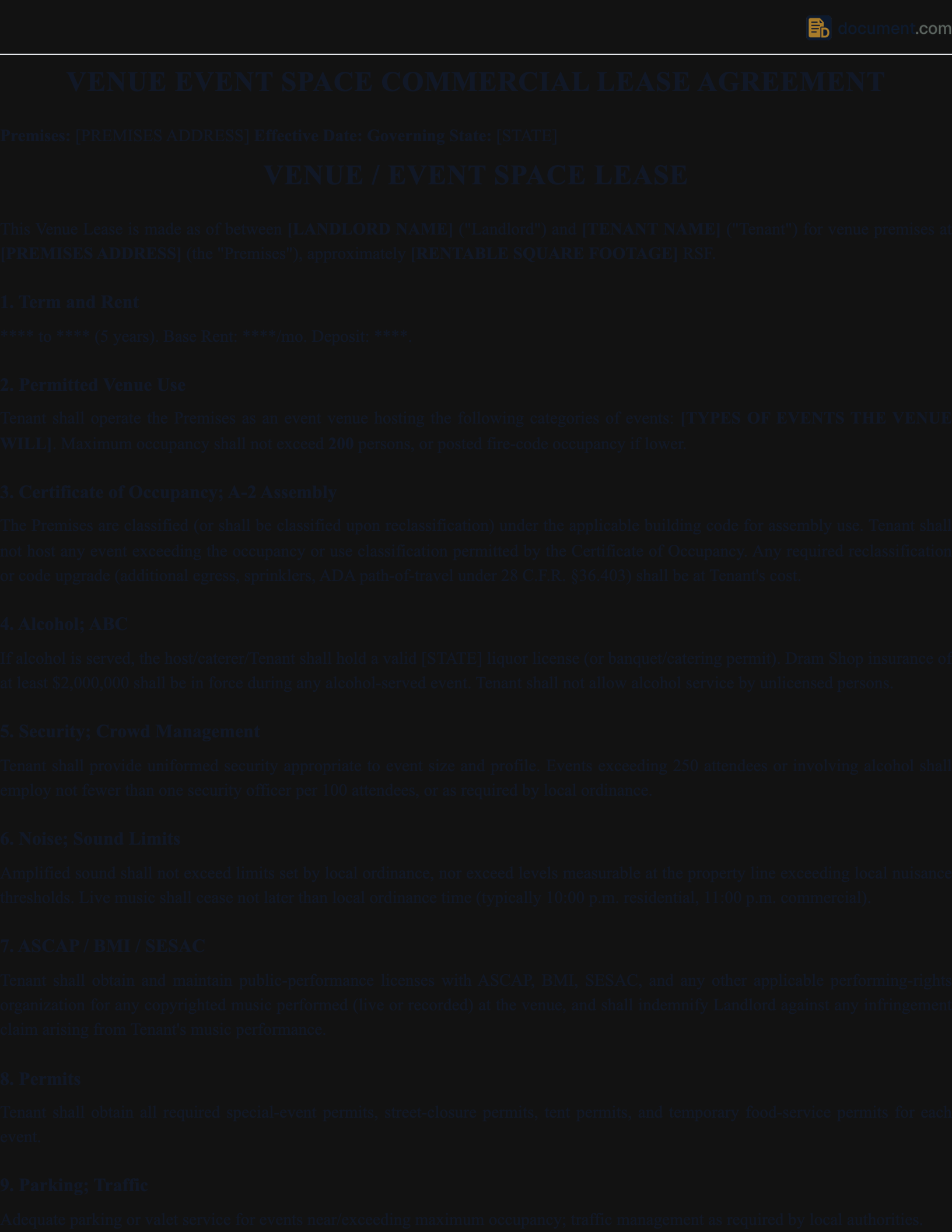



Minnesota Venue and Event Space Lease Overview
Leasing an event venue in Minnesota means navigating municipal liquor licensing in Minneapolis and St. Paul, fire code occupancy requirements, Minnesota's dram shop statute, and the state's 6.875% sales tax on admission revenue and food and beverage sales. Minnesota has no dedicated event venue statute, so the lease carries all of the weight in allocating these regulatory obligations between landlord and tenant.
The Minnesota event venue market is active in the Twin Cities, with Minneapolis's warehouse district, North Loop, and Riverfront neighborhoods supporting significant event venue operations, and St. Paul's RiverCentre and Lowertown districts doing the same. Secondary market activity exists in Rochester, Duluth, and college town markets. Minnesota's winters create operational considerations for venues that leases in warmer states never need to address, including snow removal, HVAC performance in extreme cold, and parking lot maintenance during long winter seasons.
6.875%
State sales tax
Local
Liquor licensing
Required
Notarization
0
Witnesses required
Minnesota Requirements
A Minnesota venue lease needs to cover regulatory, operational, and insurance requirements specific to assembly use spaces in the Twin Cities and greater Minnesota. Because Minnesota commercial lease law provides minimal default tenant protections, every material term must be negotiated and written into the agreement.
Minnesota Venue Lease Note
Minnesota liquor licenses are issued by local authorities, not a single statewide agency. Minneapolis and St. Paul city council approval is required as part of the licensing process and involves a public hearing. This can take months. Plan your rent commencement date accordingly and include a contingency clause addressing what happens if the license is denied or delayed due to property conditions. Minnesota's dram shop statute also creates potential venue-level liability for patron injuries after departure — confirm adequate liquor liability coverage before your first event.
Key Lease Provisions
- Fire Marshal Capacity: State the current approved occupancy load and require landlord notification if any construction affects it
- Local Liquor License Contingency: Include language addressing rent commencement and termination rights if the city council denies or delays the liquor license due to property conditions or zoning
- Noise Ordinance Compliance: Assign responsibility for sound mitigation, sound permits, and noise violation fines under the applicable Minneapolis or St. Paul ordinance
- Winter Maintenance: Specify snow removal and ice abatement responsibilities for parking areas and entrances, including response time standards before scheduled events
- Insurance Requirements: Require commercial general liability and Minnesota-compliant liquor liability coverage with named additional insured status for the landlord
- Setup and Breakdown Access: Define minimum access windows before and after events and address conflicts with adjacent tenants or building scheduling
How to Execute a Minnesota Venue Lease
Executing a venue lease in Minnesota requires confirming local licensing, regulatory compliance, and operational terms before you commit. Follow these steps to protect your investment.
Confirm Zoning and Occupancy Status
Verify with the Minneapolis or St. Paul planning department, or the relevant local authority, that the space is zoned for assembly use. Obtain the current fire marshal occupancy certificate and confirm the approved capacity is sufficient for your event types.
Negotiate Venue-Specific Terms
Agree on noise ordinance responsibility, liquor license contingency language, parking and winter maintenance, catering and bar exclusivity provisions, setup and breakdown access windows, and insurance requirements before the lease is drafted.
Draft and Review the Lease
Use a Minnesota venue-specific lease template. Have an attorney review provisions covering sub-licensing to event clients, ADA accessibility obligations, Minnesota dram shop liability exposure, and force majeure language that accounts for permit denials or winter weather events.
Execute the Lease and Apply for Licenses
Both parties sign the lease, and you then apply for any required liquor licenses through the applicable city authority, obtain a business license from the municipality, and secure your event venue operator's general liability and liquor liability insurance.
Document the Space and Begin Operations
Photograph the venue's condition before your first event. Confirm all required permits are posted as required by Minnesota law, establish your event client documentation practices including certificate of insurance collection, and set up your sales tax tracking for admissions and food and beverage revenue.
Minnesota Fees & Costs
Typical costs for operating a venue in Minnesota. Actual fees may vary by county and municipality.
| Fee / Cost | Amount |
|---|---|
| Recording Fee (Hennepin/Ramsey County) | $46 - $100+ depending on county and document |
| Minnesota State Sales Tax | 6.875% plus local option taxes |
| Notarization | $5 - $25 per signature |
| Municipal Liquor License | Varies by city — consult local authority |
| Attorney Review (recommended) | $500 - $2,000 |
Minnesota Tax Implications
Minnesota imposes a 6.875% state sales tax, and Minneapolis and other municipalities add local option taxes on top of the state rate. Event venue operators need to understand how the Minnesota Department of Revenue classifies their specific revenue streams, because admission charges, food and beverage sales, and space rental fees can all have different tax treatment depending on the structure of the transaction.
Alcohol sales at Minnesota events are licensed and taxed through the local municipal licensing system. How you structure your bar arrangements affects both tax obligations and dram shop liability exposure. Minnesota has a well-established dram shop statute, and venue operators who serve alcohol directly should confirm adequate liquor liability insurance rather than relying on event client insurance alone.
Property taxes in Minnesota are assessed at the county level. Hennepin County (Minneapolis) and Ramsey County (St. Paul) are the primary markets, and both have significant commercial property tax rates. In NNN or modified gross venue leases, property tax pass-throughs can be a substantial annual cost and are worth reviewing carefully in the lease.
Sample Minnesota Venue Rental Agreement
Preview of our Minnesota-specific template. Your document will include all fields and state-specific provisions for event venues in Minnesota.
VENUE/EVENT SPACE RENTAL AGREEMENT
STATE OF MINNESOTA
Legal Document
PARTY INFORMATION
Name: [Full Legal Name]
Address: [Minnesota Address]
County: [County]
PROPERTY DESCRIPTION
County: [County] State: Minnesota
Legal Description: [Per Recorded Plat]
Parcel No.: [APN]
Minnesota Venue Rental Agreement FAQ
Common questions about venue leases in Minnesota, including Twin Cities liquor licensing, Minnesota dram shop liability, sales tax treatment, and winter operational provisions.
Official Minnesota Resources
Official state and local resources for verifying requirements for your Minnesota venue lease.
Related Documents
Depending on your situation, you may need additional documents alongside your Minnesota venue rental agreement.
Create your Minnesota Commercial Venue Event Space Lease Agreement in under 5 minutes.
Answer a few questions and download a Minnesota-compliant document, ready for both parties to sign.