
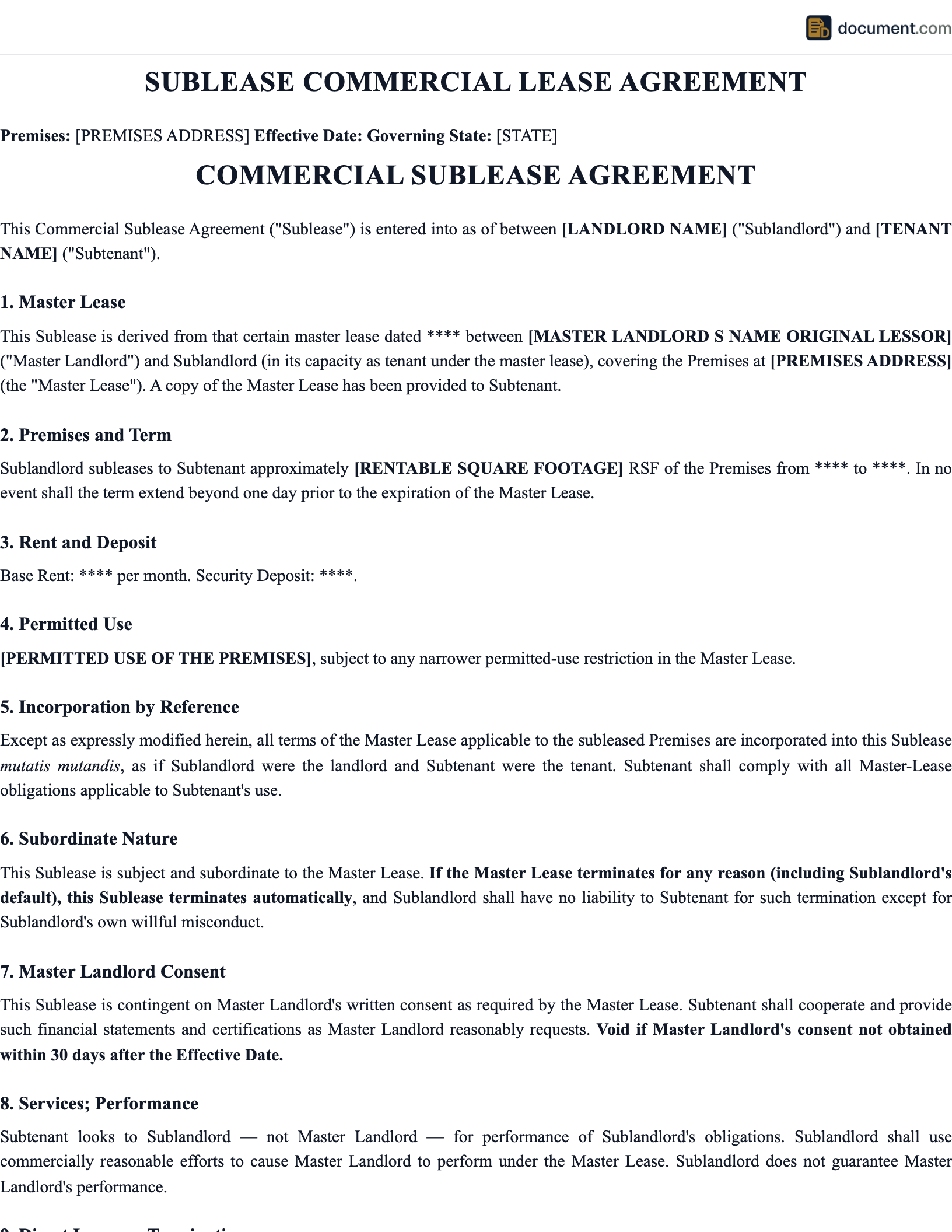



Vermont Commercial Sublease Agreement Overview
In Vermont, commercial lease transactions are governed by VT contract law and the state's commercial landlord-tenant statutes. A commercial sublease agreement used in Vermont must comply with VT-specific requirements including proper execution, any applicable recording requirements, and compliance with local zoning and business regulations. Vermont's commercial real estate market has its own characteristics that may influence the terms and provisions of this document.
Unlike residential leases, commercial leases in Vermont are primarily governed by the terms negotiated between the parties. VT provides fewer statutory protections for commercial tenants compared to residential tenants, making it essential that the document thoroughly addresses all material terms and contingencies. Vermont-specific considerations may include state tax implications, local permit requirements, and VT insurance regulations.
VT
State-specific
Varies
Filing fees
Written
Required format
Contract
Law governs
Vermont Legal Requirements
Vermont has specific requirements for commercial lease documents that must be followed to ensure enforceability. Understanding VT's legal framework helps protect both landlord and tenant interests.
Vermont Specific Note
Commercial lease law in Vermont is primarily governed by contract principles, giving parties significant flexibility in negotiating terms. However, VT has certain mandatory requirements including statute of frauds compliance, proper execution, and adherence to local zoning and permitting regulations. Legal review is recommended for all commercial lease transactions in Vermont.
Document Requirements
- Written Agreement: Vermont's statute of frauds requires commercial leases exceeding one year to be in writing
- Party Identification: Full legal names and entity types of all parties, with proper identification of authorized signatories
- Property Description: Complete description of the premises including address, suite, and square footage
- Material Terms: All material terms including rent, term, permitted use, and maintenance obligations must be clearly stated
- Proper Execution: Signatures of authorized representatives with proper acknowledgment if recording is required in VT
- Zoning Compliance: Verify the intended use complies with Vermont local zoning and land use regulations
How to Draft a Commercial Sublease Agreement in Vermont
Creating a commercial sublease agreement in Vermont involves several key steps to ensure the document is comprehensive, legally compliant, and protective of all parties' interests under VT law.
Gather Required Information
Collect full legal names of all parties, property details, financial terms, and any existing lease documents that are being modified or referenced
Use a Vermont-Specific Template
Start with a template designed for VT that includes state-specific provisions, legal language, and compliance requirements
Negotiate and Finalize Terms
Review all provisions with the other party, negotiate any disputed terms, and ensure all material points are addressed in the document
Legal Review
Have a Vermont commercial real estate attorney review the document to ensure compliance with VT law and adequate protection
Execute and Distribute
Have all parties sign the document, arrange notarization if required, and distribute copies to all parties. Record with the VT county office if applicable
Vermont-Specific Key Provisions
When drafting a commercial sublease agreement for use in Vermont, several state-specific provisions should be included to ensure full compliance with VT law and adequate protection for all parties.
Vermont commercial real estate law allows significant flexibility in negotiating lease terms. However, certain provisions are essential for enforceability and dispute resolution under VT law. These include proper governing law clauses, Vermont-compliant dispute resolution provisions, insurance requirements that meet VT standards, and environmental compliance provisions.
Additionally, Vermont may have specific requirements regarding commercial rent tax, signage regulations, parking requirements, ADA compliance, and local business licensing that should be addressed in the document. A Vermont commercial real estate attorney can help identify all applicable VT-specific provisions for your particular transaction.
Vermont Fees & Costs
Below is a breakdown of typical costs associated with commercial lease transactions in Vermont. Actual fees may vary by county and specific circumstances.
| Fee / Cost | Typical Amount |
|---|---|
| Document Preparation | $200 - $1,000 |
| Legal Review | $500 - $2,500 |
| Recording Fees (if applicable) | $25 - $150 |
| Notarization | $5 - $25 per signature |
| Title Search (if needed) | $200 - $500 |
Sample Vermont Commercial Sublease Agreement
Below is a preview of our Vermont-specific commercial sublease agreement. Your customized document will include all fields and provisions required under VT law.
COMMERCIAL SUBLEASE AGREEMENT
STATE OF VERMONT
VT-Compliant Template
PARTY A:
Name: [Full Legal Name]
Address: [Vermont Address]
PARTY B:
Name: [Full Legal Name]
Address: [Vermont Address]
PROPERTY / PREMISES:
Address: [Property Address]
County: [Vermont County]
VERMONT COMPLIANCE
This document complies with Vermont (VT) state law requirements and includes all provisions mandated for this type of document in Vermont.