



Tennessee Commercial Modified Gross Lease Overview
A modified gross lease sits between a full gross lease and a triple-net, letting the landlord and tenant negotiate their own expense split. In Tennessee, this structure is standard in office parks across Nashville, Brentwood, Franklin, and other suburban markets that have grown rapidly with the state's population and business influx. The typical Tennessee modified gross structure has the tenant paying utilities and janitorial directly while the landlord covers taxes, insurance, and exterior maintenance.
Tennessee has no income tax on wages and no commercial rent tax, which keeps the financial picture cleaner than in many states. Property taxes assessed by county assessors are the main variable in the landlord's cost pool, and rising commercial values in Davidson, Williamson, and Rutherford counties have pushed that exposure upward. For modified gross leases in the Nashville metro area, it is worth discussing whether a limited pass-through for tax increases above a defined base level is appropriate.
TN
State-specific
Varies
Filing fees
Written
Required format
Contract
Law governs
Tennessee Legal Requirements
Tennessee has specific requirements for commercial lease documents that must be followed to ensure enforceability. Understanding TN's legal framework helps protect both landlord and tenant interests.
Tennessee Specific Note
Tennessee has no commercial rent tax and no income tax on wages. Property taxes assessed by county assessors are the primary variable in the landlord's modified gross expense pool. Nashville metro counties have experienced significant assessed value increases with commercial growth, so landlords should verify that the base rent under a modified gross structure adequately covers their projected tax and insurance obligations for the full lease term.
Key Modified Gross Lease Provisions for Tennessee
- Expense Schedule: Attach a schedule identifying every cost category and which party bears responsibility
- Utility Metering: Confirm whether the tenant's space is separately metered; define allocation if metering is shared
- HVAC Responsibility: State clearly whether the tenant or landlord handles HVAC maintenance, repair, and replacement
- Escalation and Pass-Through Provisions: Define annual rent increases and whether any landlord-covered expense increases can be partially passed through
- Capital vs. Operating Expenses: Define which costs are capital expenditures the landlord absorbs versus operating expenses that affect the modified gross structure
How to Draft a Tennessee Modified Gross Lease
The foundation of a good Tennessee modified gross lease is a clear, documented expense split agreed to before anyone signs. Here is the process.
Map Every Expense Category
Walk through every operating expense for the property: property taxes, insurance, utilities, janitorial, HVAC, roof, parking, and common area maintenance. In Tennessee, property taxes and insurance are typically landlord-covered in a modified gross structure while utilities and janitorial go to the tenant.
Verify Utility Metering
Confirm that the tenant's space is separately metered or confirm the sub-metering arrangement. Older office buildings in Nashville and Knoxville sometimes share meters, and the allocation methodology needs to be defined explicitly in the lease rather than settled informally.
Set the Escalation Structure
Agree on annual rent escalations and decide whether any landlord-covered expense increases can be partially passed through above a defined base. Given Nashville's rising property tax environment, this is worth discussing explicitly before finalizing the rent figure.
Execute the Lease
Both parties sign the final document with all exhibits attached. Tennessee's statute of frauds requires commercial leases longer than one year to be in writing. Notarization is not required for the lease to be enforceable between the parties but may be required by a lender if the lease will be recorded.
Distribute and Archive
Each party keeps a fully executed original including all expense schedules and exhibits. The attached documents are part of the binding agreement under Tennessee contract law.
Tennessee Modified Gross Lease Costs
Typical cost items for a Tennessee commercial modified gross lease. Amounts vary by market, property type, and negotiated terms.
| Fee / Cost | Typical Amount |
|---|---|
| Base Rent (modified gross) | Negotiated; excludes tenant-direct expenses |
| Tenant-Paid Utilities | Paid directly by tenant per actual usage |
| State Commercial Rent Tax | None (Tennessee does not tax commercial rent) |
| Notarization (if recording required) | $5 - $25 per signature |
| Attorney Review (recommended) | $250 - $750 for commercial lease review |
Sample Tennessee Commercial Modified Gross Lease
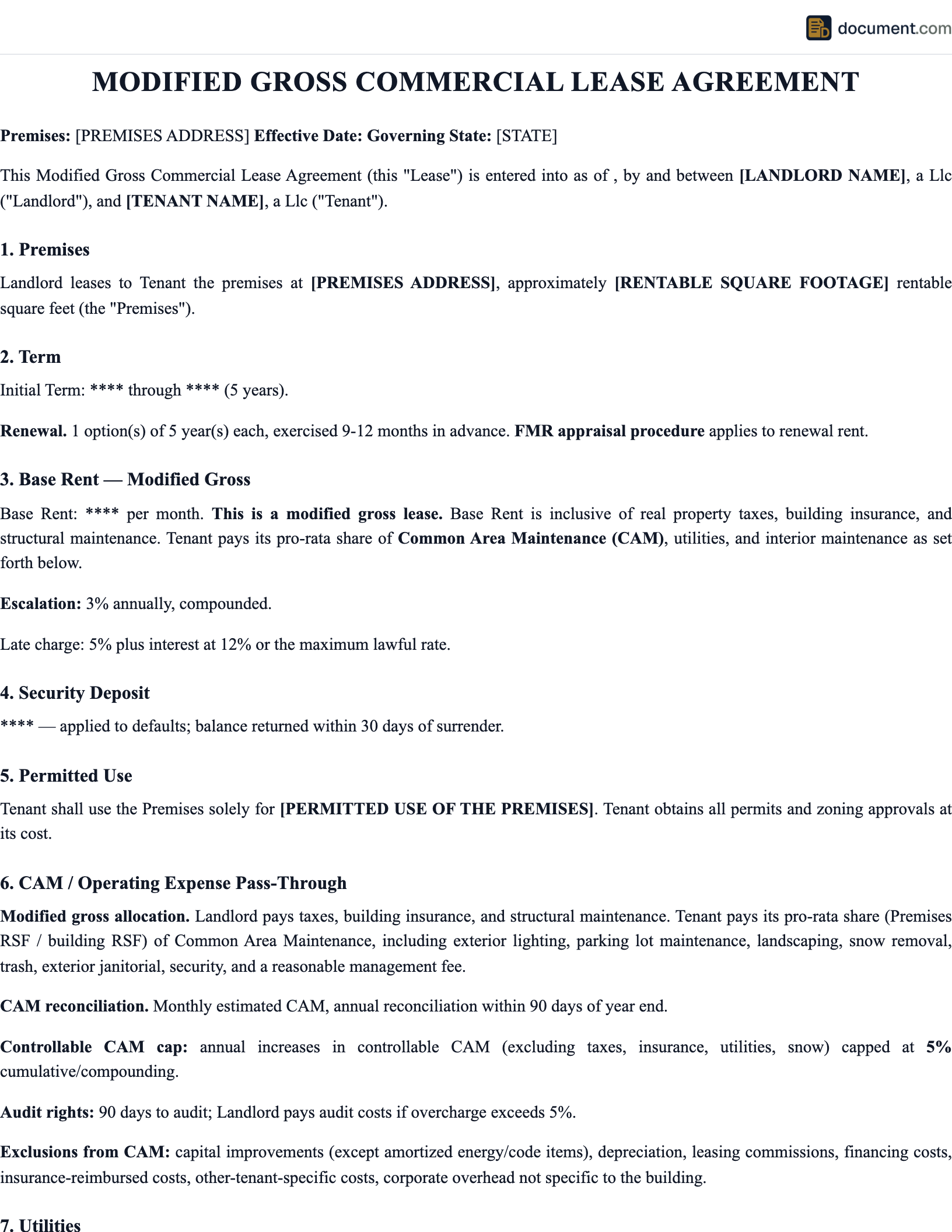
Below is a preview of our Tennessee-specific commercial modified gross lease. Your customized document will include all fields and provisions required under TN law.
COMMERCIAL MODIFIED GROSS LEASE
STATE OF TENNESSEE
TN-Compliant Template
PARTY A:
Name: [Full Legal Name]
Address: [Tennessee Address]
PARTY B:
Name: [Full Legal Name]
Address: [Tennessee Address]
PROPERTY / PREMISES:
Address: [Property Address]
County: [Tennessee County]
TENNESSEE COMPLIANCE
This document complies with Tennessee (TN) state law requirements and includes all provisions mandated for this type of document in Tennessee.