
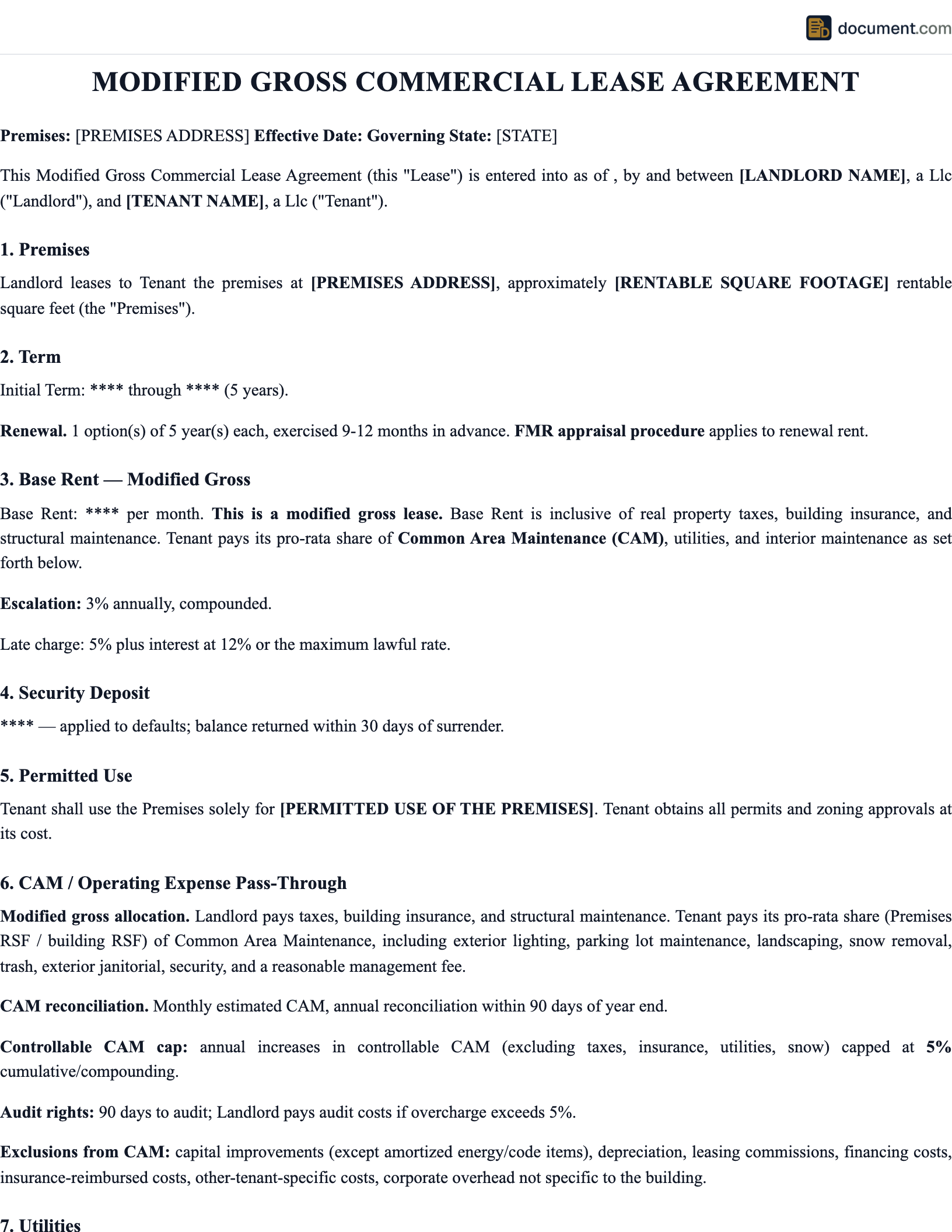



Rhode Island Commercial Modified Gross Lease Overview
The modified gross lease is a practical structure for Rhode Island office and mixed-use commercial properties, offering tenants more cost predictability than a net lease while allowing landlords to pass certain escalating expenses above a base level. Providence's downtown, the Jewelry District, and suburban corridors in Cranston and Warwick commonly use this structure. The state's compact commercial market means most tenants and landlords are dealing with similar cost frameworks, but the municipality-level property tax system creates variation across the state's 39 cities and towns.
Rhode Island modified gross leases are governed by general contract law. There is no statewide commercial landlord-tenant act governing modified gross lease terms, and there is no commercial rent tax at the state level. The expense split depends entirely on what the parties negotiate. For leases longer than one year, Rhode Island's Statute of Frauds requires a written agreement. Given the potential for municipal revaluation cycles to shift property tax costs, the base-year methodology and escalation provisions deserve close attention during negotiations.
RI
State-specific
Varies
Filing fees
Written
Required format
Contract
Law governs
Rhode Island Legal Requirements
A Rhode Island modified gross lease needs a clearly written expense schedule that removes ambiguity about which party bears each cost category. Because Rhode Island courts look first to the contract language in commercial lease disputes, vague cost allocation language can produce unexpected outcomes.
Rhode Island-Specific Note
Rhode Island's municipal property tax revaluation cycles can significantly shift assessed values during a lease term. If the lease uses a base-year expense stop set before a revaluation, tenants may face sharp increases in pass-through costs in later years. Reviewing the revaluation history for the relevant municipality and modeling the impact of a potential mid-lease reassessment helps tenants evaluate the true long-term cost of the modified gross structure.
Key Modified Gross Lease Provisions
- Expense Split Schedule: A written exhibit listing each expense category and assigning it to landlord or tenant, with pro-rata allocation methodology for shared costs
- Base Year or Expense Stop: The threshold above which tenants bear cost escalations, with the specific base year chosen carefully given Rhode Island's revaluation cycles
- Escalation Terms: Annual base rent escalation rates defined as a fixed percentage, CPI adjustment, or market reset at defined intervals
- Utility Responsibility: Whether the tenant pays utilities directly to the utility provider or through the landlord, and how sub-metering is handled if applicable
- Statute of Frauds: All Rhode Island commercial leases exceeding one year must be in writing and signed by authorized representatives of each party
How to Draft a Commercial Modified Gross Lease in Rhode Island
The most important step in drafting a Rhode Island modified gross lease is agreeing on the expense framework before the parties finalize base rent, since the split between landlord and tenant costs drives how the base rent is priced.
Agree on the Expense Framework
Before negotiating base rent, agree on which expenses the landlord embeds in the gross rent and which the tenant pays directly or as pass-throughs above a threshold. This determines how the base rent is priced relative to market net rents.
Draft a Detailed Expense Schedule
Prepare an exhibit listing each cost category and assigning landlord or tenant responsibility. Request three to five years of actual operating cost data, including municipal property tax history for the relevant Rhode Island city or town, to evaluate the base year fairly.
Set Escalation Terms and Review Revaluation Risk
Negotiate annual base rent escalation terms and, if applicable, a cap on controllable expense stop pass-throughs. Ask the landlord when the relevant municipality last conducted a revaluation and whether another is expected during the proposed lease term.
Execute the Lease
Both parties sign the final lease and attached expense schedule. For terms over one year, the Rhode Island Statute of Frauds requires a written and signed agreement. Consider having a Rhode Island commercial real estate attorney review before execution.
Record at City or Town Level if Appropriate
For long-term leases, recording a memorandum at the relevant Rhode Island city or town clerk's office provides constructive notice to future buyers or lenders. Real property recording in Rhode Island is handled at the municipal level rather than through county offices.
Rhode Island-Specific Key Provisions
Rhode Island's small but strategically positioned commercial market creates a few practical dynamics worth addressing in a modified gross lease. The state sits between two major metropolitan areas, and some tenants use Providence properties as lower-cost alternatives to Boston or New York locations. This proximity affects lease pricing and negotiation leverage, particularly in the Jewelry District and downtown Providence markets.
There is no statewide commercial rent tax in Rhode Island, which simplifies the cost analysis compared to some other states. Rhode Island's 7 percent sales tax does not apply to commercial rent payments directly, so the expense split in a modified gross lease focuses purely on operating cost economics without a superimposed transactional tax layer.
For longer Rhode Island commercial leases, addressing subordination, non-disturbance, and attornment rights provides tenants with assurance that the lease will survive a lender foreclosure or a property sale. Given the size of Rhode Island's commercial market and the frequency of financing events, these protections are worth including in any modified gross lease with a term exceeding three to five years.
Rhode Island Modified Gross Lease Costs
Typical costs associated with a Rhode Island modified gross lease. Base rent and expense pass-through amounts vary across Providence and Rhode Island's suburban markets.
| Fee / Cost | Typical Amount |
|---|---|
| Monthly Modified Gross Rent | Includes landlord-covered expenses; varies by market and building class |
| Tenant-Paid Utilities | Electricity and gas for leased suite; typically a direct tenant obligation |
| Expense Stop Pass-Through | Pro-rata share of cost increases above base-year threshold; sensitive to revaluation cycles |
| City or Town Recording Fee (memorandum) | Optional; varies by municipality in Rhode Island |
| Attorney Review | $300 to $700 for commercial lease review |
Sample Rhode Island Commercial Modified Gross Lease
Below is a preview of our Rhode Island-specific commercial modified gross lease. Your customized document will include all fields and provisions required under RI law.
COMMERCIAL MODIFIED GROSS LEASE
STATE OF RHODE ISLAND
RI-Compliant Template
PARTY A:
Name: [Full Legal Name]
Address: [Rhode Island Address]
PARTY B:
Name: [Full Legal Name]
Address: [Rhode Island Address]
PROPERTY / PREMISES:
Address: [Property Address]
County: [Rhode Island County]
RHODE ISLAND COMPLIANCE
This document complies with Rhode Island (RI) state law requirements and includes all provisions mandated for this type of document in Rhode Island.