
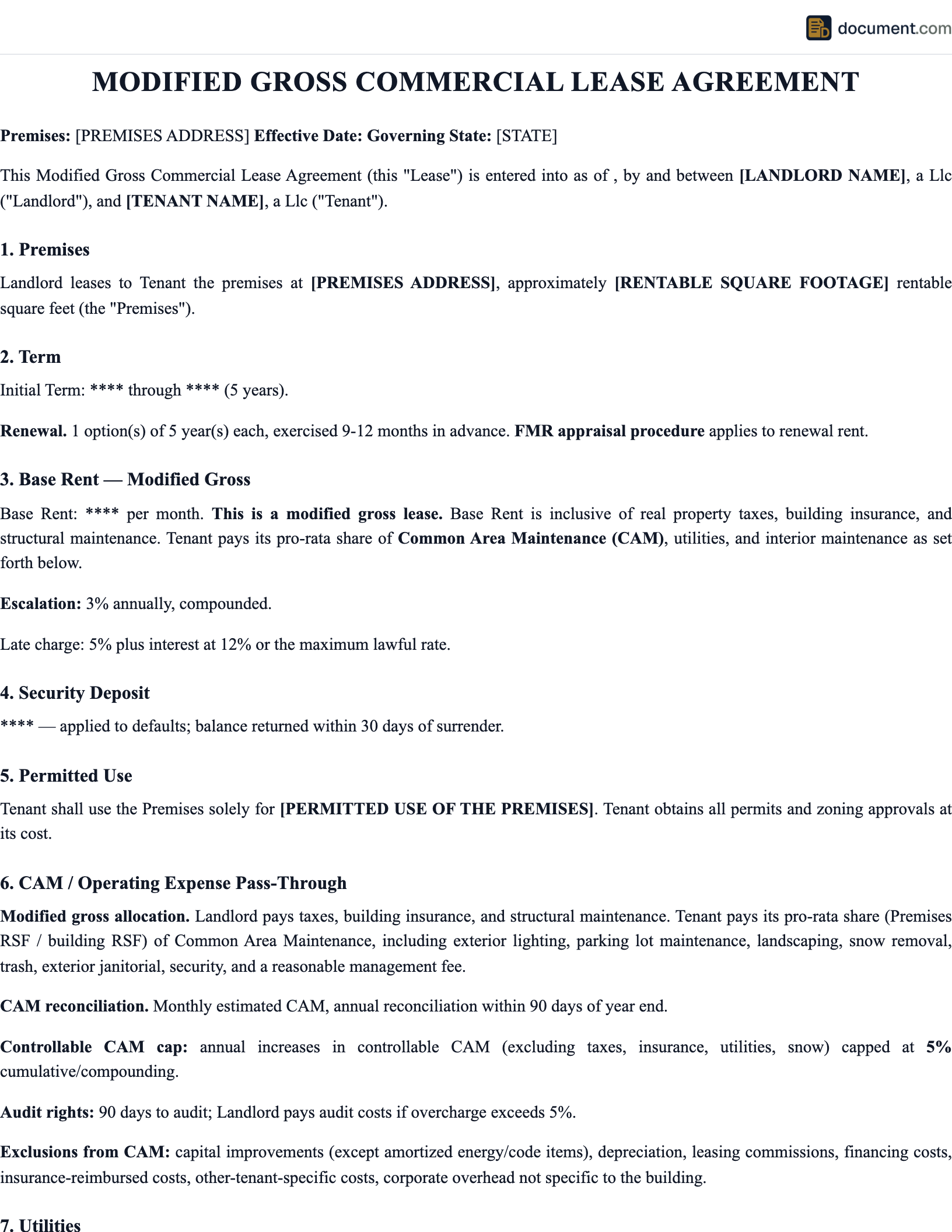



Pennsylvania Commercial Modified Gross Lease Overview
The modified gross lease is among the most common structures for Pennsylvania office, flex-space, and suburban retail properties. It offers tenants more cost predictability than a net lease while giving landlords the ability to pass certain escalating expense categories to tenants above a defined base level. Philadelphia's Center City and suburban markets around Montgomery, Chester, and Bucks Counties have long used modified gross structures as a middle ground in office lease negotiations, and the same approach is widespread in Pittsburgh's office and tech corridors.
Pennsylvania modified gross leases are governed by general contract law principles. The state does not have a dedicated commercial landlord-tenant act that imposes specific modified gross lease terms, which means the expense schedule and allocation methodology depend entirely on what the parties negotiate. For leases longer than one year, the Pennsylvania Statute of Frauds requires the agreement to be in writing. There is no statewide commercial rent tax, so gross and modified gross rent payments are generally not subject to sales or use tax at the state level.
PA
State-specific
Varies
Filing fees
Written
Required format
Contract
Law governs
Pennsylvania Legal Requirements
A Pennsylvania modified gross lease should include a clearly written expense schedule that leaves no ambiguity about which party is responsible for each cost category. Disputes over whether a particular expense falls on the landlord or tenant side are among the most common sources of commercial lease litigation, and Pennsylvania courts will look first to the contract language when resolving those disputes.
Pennsylvania-Specific Note
Philadelphia modified gross leases must account for the landlord's BIRT exposure, which influences pricing in ways that may not be apparent from the face of the lease. Allegheny County leases should address the county's separate assessment cycle, as property tax pass-throughs can shift after reassessment events. For both markets, reviewing three to five years of actual operating cost history before agreeing to a base year gives tenants the clearest picture of future expense stop exposure.
Key Modified Gross Lease Provisions
- Expense Split Schedule: An exhibit listing each expense category and whether the landlord or tenant bears it, with pro-rata allocation methodology for shared costs
- Base Rent Escalation: Annual rent increases defined as a fixed percentage, CPI adjustment, or market-rate reset, along with caps if any apply
- Expense Stop or Base Year: Threshold above which tenants share in cost increases, with the specific base year and gross-up methodology defined
- Utility Responsibility: Specify whether the tenant pays utilities directly to the utility provider or through the landlord, and address sub-metering if applicable
- Statute of Frauds Compliance: All Pennsylvania commercial leases exceeding one year must be in writing and signed by authorized representatives
How to Draft a Commercial Modified Gross Lease in Pennsylvania
Drafting a Pennsylvania modified gross lease requires agreeing on the expense framework before addressing other lease terms, since the expense split affects how base rent is priced.
Agree on the Expense Framework
Before negotiating base rent, reach agreement on which expenses the landlord will embed in the gross rent and which the tenant will pay directly or as pass-throughs. This framework drives the pricing of the base rent.
Draft a Detailed Expense Schedule
Prepare an exhibit that lists every expense category and assigns it to landlord or tenant. For shared costs, specify the allocation method. Request three to five years of actual operating cost data from the landlord to evaluate the base year fairly.
Set Escalation Terms and Expense Cap
Negotiate annual base rent escalation terms and, if applicable, a cap on controllable expense stop pass-throughs. For Philadelphia properties, verify whether BIRT exposure affects the landlord's base rent pricing before accepting an expense stop structure.
Execute the Lease
Both parties sign the final lease and expense schedule. For terms exceeding one year, the Pennsylvania Statute of Frauds requires a written and signed agreement. Consider having a Pennsylvania commercial real estate attorney review the document before execution.
Record if Appropriate
Recording a memorandum of lease at the county recorder of deeds is optional but provides constructive notice to future buyers or lenders. This step is particularly worth considering for long-term Pennsylvania commercial leases where the landlord may refinance the property.
Pennsylvania-Specific Key Provisions
Pennsylvania modified gross leases benefit from several state-specific considerations that do not arise in all commercial markets. The BIRT in Philadelphia affects how landlords price gross rents in the city, and tenants who understand this dynamic are better positioned to evaluate whether a quoted rent reflects fair market value or includes a premium to cover the landlord's city tax obligations.
Pennsylvania also lacks a statewide commercial rent tax, which simplifies the analysis compared to states like Texas or Arizona that impose transactional taxes on commercial lease payments. Both parties can focus on the economics of the expense split without needing to model rent tax on top of base rent.
For longer-term Pennsylvania modified gross leases, consider addressing what happens when the landlord sells or refinances the property. A subordination, non-disturbance, and attornment agreement gives tenants assurance that a new owner or lender will honor the existing lease terms. This protection is especially relevant for tenants who have made significant tenant improvement investments within the leased space.
Pennsylvania Modified Gross Lease Costs
Typical costs associated with a Pennsylvania modified gross lease transaction. Base rent and expense pass-through amounts vary by market and building class.
| Fee / Cost | Typical Amount |
|---|---|
| Monthly Modified Gross Rent | Includes landlord-covered expenses; varies by market and building class |
| Tenant-Paid Utilities | Electricity and gas for demised premises; typically a direct tenant obligation |
| Expense Stop Pass-Through | Pro-rata share of operating cost increases above base-year threshold |
| County Recording Fee (memorandum of lease) | Varies by county; optional for constructive notice purposes |
| Attorney Review | $300 to $800 for commercial lease review |
Sample Pennsylvania Commercial Modified Gross Lease
Below is a preview of our Pennsylvania-specific commercial modified gross lease. Your customized document will include all fields and provisions required under PA law.
COMMERCIAL MODIFIED GROSS LEASE
STATE OF PENNSYLVANIA
PA-Compliant Template
PARTY A:
Name: [Full Legal Name]
Address: [Pennsylvania Address]
PARTY B:
Name: [Full Legal Name]
Address: [Pennsylvania Address]
PROPERTY / PREMISES:
Address: [Property Address]
County: [Pennsylvania County]
PENNSYLVANIA COMPLIANCE
This document complies with Pennsylvania (PA) state law requirements and includes all provisions mandated for this type of document in Pennsylvania.