



North Carolina Commercial Modified Gross Lease Overview
A modified gross lease in North Carolina is a negotiated hybrid structure where the tenant pays a base rent covering some building operating expenses, and other costs are assigned individually to landlord or tenant. It is most common in multi-tenant office buildings, flex-industrial properties, and professional suites across the state. Charlotte, the Research Triangle, and Triad markets all have active modified gross lease activity, particularly in suburban office parks and mixed-use flex space.
North Carolina commercial lease law is contract-based with minimal statutory protections for commercial tenants. This means the expense split, escalation mechanism, audit rights, and maintenance responsibilities are determined entirely by what the parties negotiate and put in writing. Vague or incomplete expense schedules are the most common source of modified gross lease disputes in North Carolina, making clear written allocations one of the most important parts of the drafting process.
NC
State-specific
Varies
Filing fees
Written
Required format
Contract
Law governs
North Carolina Modified Gross Lease Requirements
Because modified gross leases in North Carolina are fully negotiated contracts, the lease document must address every expense category explicitly. Silence on a cost category can lead to disputes about who is responsible.
Complete the Expense Schedule Before Signing
The most important document in a North Carolina modified gross lease is the expense responsibility schedule. It should list every significant cost category and clearly assign it to landlord, tenant, or a specified split. HVAC, utilities, janitorial, pest control, parking lot maintenance, roof, structure, and common areas should all appear on this list. Vague language like "tenant pays for its own utilities and operating costs" is a common source of disputes in NC commercial lease litigation.
Key Lease Provisions
- Expense Responsibility Schedule: Attach a complete category-by-category list assigning each cost to landlord or tenant; this is the defining document of any modified gross lease
- HVAC Allocation: Specify which HVAC equipment the tenant maintains and whether the tenant is responsible for routine service, major repairs, and eventual replacement
- Utility Metering: Confirm whether electricity and gas for the leased premises are separately metered to the tenant or allocated from a master meter; separate metering is strongly preferred for cost transparency
- Escalation Terms: Define how the base rent escalates annually and whether pass-through expenses have caps; cap controllable expense increases at 3%-5% per year
- Audit Rights: Tenants should have the right to audit expense reconciliation statements, with a notice window and a landlord-bears-cost provision if overcharges exceed a defined threshold
- Landlord Default Remedies: Include tenant remedies if the landlord fails to maintain the building components it is responsible for; self-help rights with offset against rent are worth negotiating in North Carolina
How to Draft a Commercial Modified Gross Lease in North Carolina
Drafting a modified gross lease in North Carolina is primarily an exercise in mapping out expense responsibilities before negotiating the base rent number. The steps below reflect how experienced NC commercial real estate practitioners approach this process.
Build a Complete Expense Category List
Before drafting rent numbers, list every significant operating cost for the property: property taxes, insurance, HVAC, electricity, water, janitorial, pest control, parking lot, roof, common areas, trash removal, and property management. This becomes the basis for the expense schedule.
Assign Each Category to Landlord or Tenant
Negotiate and document which costs are folded into the base rent (landlord's responsibility) and which are the tenant's separate obligation, either paid directly by the tenant or billed by the landlord as pass-throughs. Document the split explicitly in a schedule attached to the lease.
Set Base Rent and Escalation Terms
With the expense split agreed, set the base rent to reflect the landlord's retained costs. Agree on annual escalation, whether fixed percentage or CPI-based, and negotiate caps on controllable pass-throughs. North Carolina courts enforce escalation terms as written, so precision in the escalation clause matters.
Have a North Carolina Commercial Lease Attorney Review
Engage a North Carolina attorney experienced in commercial transactions to review the full lease and the expense schedule. Lawyers familiar with Charlotte, Triangle, or Triad markets can identify market-standard deviations and landlord-favorable provisions that are not immediately obvious to non-attorneys.
Execute with Expense Schedule Attached
Both parties sign the lease and the expense schedule as an exhibit. Distribute fully executed copies to both parties. Set up accounting systems that match the agreed payment structure: base rent monthly, plus any tenant-direct expense payments or landlord invoices for the pass-through categories.
North Carolina Modified Gross Lease: Key Provisions
Several provisions carry particular weight in North Carolina modified gross lease negotiations. Getting these terms right at the outset avoids the most common disputes between commercial landlords and tenants in the state.
Holdover provisions deserve specific attention. North Carolina commercial leases often include automatic conversion to a month-to-month holdover at 125%-150% of the last monthly rent. This creates real incentive to monitor renewal deadlines. Similarly, default and cure provisions should give reasonable notice and cure windows (commonly 10 days for monetary defaults and 30 days for non-monetary defaults) so that minor administrative issues do not trigger lease termination rights.
Insurance requirements in North Carolina modified gross leases typically require the tenant to carry general liability coverage in the range of $1 million per occurrence and $2 million aggregate, with the landlord named as additional insured. Landlords carry property insurance on the building, and tenants insure their own contents and business operations. Confirming actual coverage requirements early avoids last-minute insurance changes before lease signing.
North Carolina Fees & Costs
Below is a breakdown of typical costs associated with commercial lease transactions in North Carolina. Actual fees may vary by county and specific circumstances.
| Fee / Cost | Typical Amount |
|---|---|
| Modified Gross Base Rent | Charlotte suburban office/flex: $16-$26/sq ft; Research Triangle: $18-$30/sq ft; depends heavily on which expenses are folded into rent |
| Tenant Direct Expenses | Electricity: $1.50-$4/sq ft; HVAC maintenance: $0.50-$1.50/sq ft; janitorial: $0.75-$1.50/sq ft annually depending on space type |
| Operating Expense Pass-Throughs | If any operating expenses are billed separately by the landlord, budget $2-$5/sq ft annually; confirm with actual prior year invoices before signing |
| Tenant Improvements | Landlord TI allowances in NC modified gross deals vary widely; Charlotte and Triangle markets see $15-$50/sq ft for longer-term leases in competitive conditions |
| Attorney Review | $500-$2,000 for North Carolina commercial modified gross lease negotiation and review |
Sample North Carolina Commercial Modified Gross Lease
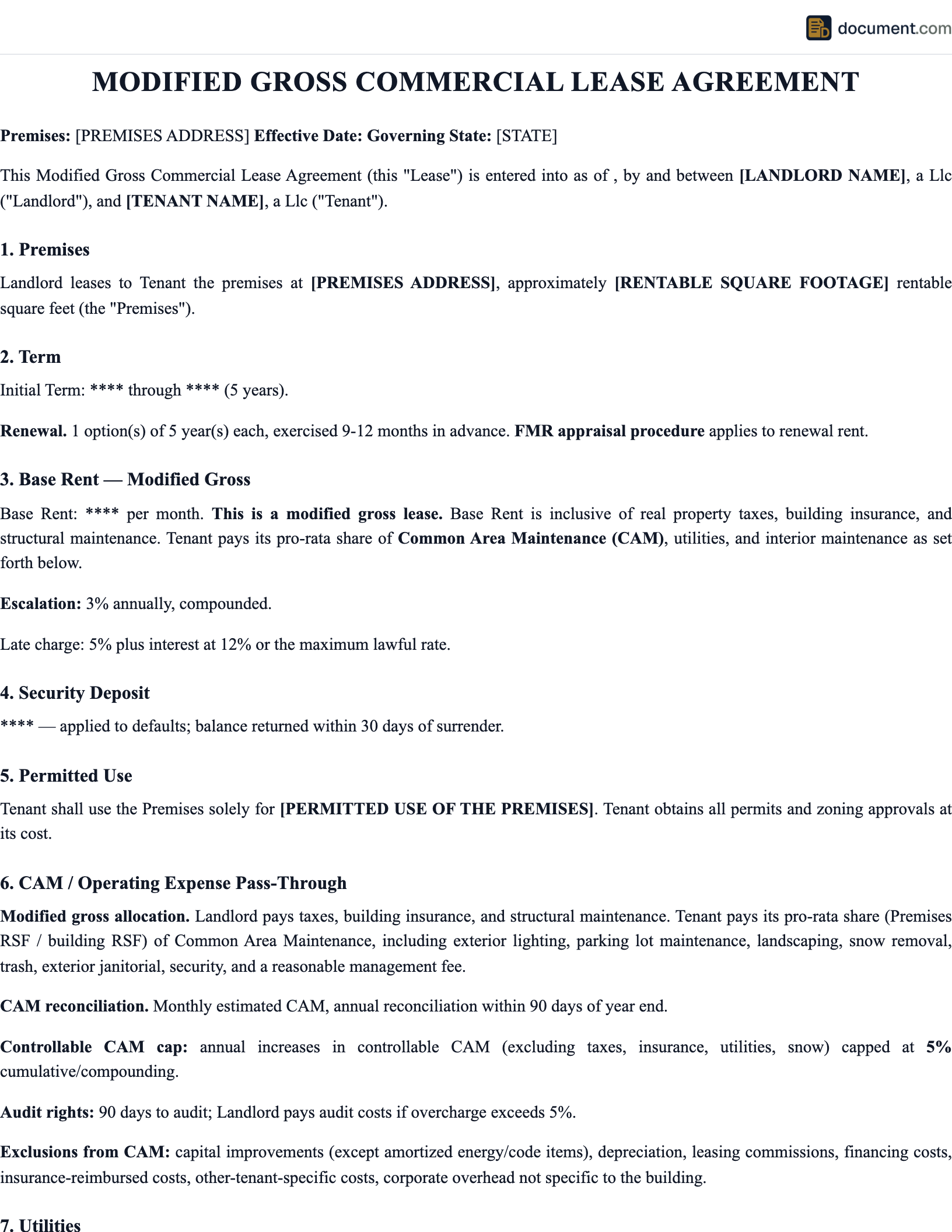
Below is a preview of our North Carolina-specific commercial modified gross lease. Your customized document will include all fields and provisions required under NC law.
COMMERCIAL MODIFIED GROSS LEASE
STATE OF NORTH CAROLINA
NC-Compliant Template
PARTY A:
Name: [Full Legal Name]
Address: [North Carolina Address]
PARTY B:
Name: [Full Legal Name]
Address: [North Carolina Address]
PROPERTY / PREMISES:
Address: [Property Address]
County: [North Carolina County]
NORTH CAROLINA COMPLIANCE
This document complies with North Carolina (NC) state law requirements and includes all provisions mandated for this type of document in North Carolina.