



New Hampshire Commercial Modified Gross Lease Overview
A New Hampshire modified gross lease occupies the middle ground between a full-service gross lease and a triple net lease. The landlord and tenant negotiate which specific operating expenses each party covers rather than having one side bear all costs. This hybrid structure is common in New Hampshire office buildings in Portsmouth, Manchester, and Nashua, as well as in multi-tenant commercial parks across the state. The lease is governed entirely by contract; no New Hampshire statute prescribes how commercial operating expenses must be allocated. The expense split that the parties negotiate and document is the binding rule throughout the lease term.
New Hampshire's cost environment has meaningful implications for modified gross lease negotiations. The state has no sales tax and no commercial rent tax, which simplifies expense accounting. However, New Hampshire municipal property taxes are administered at the town and city level and are among the highest in the country, making the property tax component a significant variable in any modified gross allocation discussion. New Hampshire winters also drive elevated heating costs and winter maintenance obligations that must be assigned clearly to one party or the other. A well-negotiated New Hampshire modified gross lease specifies each expense category precisely and addresses escalation, caps, and utility responsibility so there is no ambiguity about what each party owes on an ongoing basis.
NH
State-specific
Varies
Filing fees
Written
Required format
Contract
Law governs
New Hampshire Modified Gross Lease Requirements
New Hampshire modified gross leases are governed entirely by contract. The following provisions are essential for a well-drafted New Hampshire modified gross lease that minimizes the risk of expense disputes during the term:
New Hampshire Tax and Expense Note
New Hampshire has no state sales tax and no commercial rent tax. However, municipal property taxes levied by towns and cities are a significant cost driver and are among the highest in the country. New Hampshire winters also produce elevated heating and maintenance costs compared to warmer states. Both factors influence which party should bear specific expenses in a modified gross lease. Before finalizing the expense allocation, obtain the current municipal tax bill and two to three years of operating expense history for the specific property to understand the baseline costs embedded in any proposed split.
Key Provisions
- Explicit Expense Allocation: List each operating expense category and assign it to the landlord or tenant; vague allocation language is the primary source of modified gross lease disputes in New Hampshire
- Written Form: New Hampshire's statute of frauds requires commercial leases exceeding one year to be in writing; the expense allocation must be part of the written agreement, not a side verbal understanding
- Utility and Heating Responsibility: Specify which utility costs the tenant pays directly; in New Hampshire, heating costs are a meaningful expense item and should be clearly allocated between the parties
- Escalation Methodology: Specify how the tenant's allocated expense share changes over the lease term; New Hampshire municipal property taxes can increase substantially in reassessment years
- Management Fee Treatment: Address whether property management fees are included in the shared expense pool; if included, negotiate a cap on the management fee percentage
How to Draft a New Hampshire Modified Gross Lease
Drafting a New Hampshire modified gross lease requires careful attention to the expense allocation and escalation provisions, since those terms determine each party's financial obligations throughout the lease term.
Build the Expense Allocation Table
List every operating expense category relevant to the property and assign each to the landlord or tenant. In New Hampshire, pay particular attention to municipal property taxes (town or city specific), heating and utility costs, snow removal and winter maintenance, common area maintenance, and property management fees.
Research Current New Hampshire Operating Costs
Obtain the current municipal tax bill and two to three years of operating expense history for the specific property. New Hampshire towns conduct periodic full reassessments that can significantly change assessed values and therefore property tax obligations. Review utility cost history to project heating expense exposure over the lease term.
Prepare a New Hampshire-Specific Form
Use a modified gross lease form that incorporates the agreed expense allocation, addresses escalation methodology and any expense caps, and uses governing law and venue provisions appropriate for the relevant New Hampshire county. Hillsborough County courts serve Manchester and Nashua; Rockingham County courts serve Portsmouth.
Legal Review
Have a New Hampshire commercial real estate attorney review the draft to confirm the expense allocation is unambiguous, escalation provisions are enforceable, and the overall agreement adequately protects the client's interests under New Hampshire law.
Execute and Distribute Copies
Both parties sign. Confirm each signatory has authority to bind their organization. Provide executed copies to the landlord and tenant. Store the signed agreement with the expense history and municipal tax information assembled during drafting.
New Hampshire Modified Gross Lease Key Provisions
Several provisions in a New Hampshire modified gross lease require particular attention given the state's contract-based commercial tenancy environment and its distinct cost drivers. The expense allocation table is the foundation of the document, but supporting provisions that govern escalation, caps, and dispute resolution are equally important for preventing disagreements during the lease term.
New Hampshire courts enforce commercial lease provisions as agreed by the parties. Judges applying New Hampshire contract law will not rewrite ambiguous expense allocations in favor of either party; they interpret the document as written using standard contract principles. This means that imprecise expense allocation language such as "tenant pays operating costs" without defining which costs creates genuine litigation risk if the parties later disagree. Specificity in the expense assignment provisions is a direct protection against future disputes.
Governing law and venue provisions in a New Hampshire modified gross lease should specify New Hampshire law as the controlling jurisdiction and identify the appropriate superior court for dispute resolution. Hillsborough County Superior Court is the appropriate venue for Manchester and Nashua-area properties. Rockingham County Superior Court serves Portsmouth and the Seacoast region. Strafford County Superior Court serves Dover and Rochester-area properties. Specifying the correct county court in the lease avoids venue disputes if an expense allocation disagreement requires litigation.
New Hampshire Modified Gross Lease Costs
The following table summarizes typical transaction costs for executing a New Hampshire commercial modified gross lease. These costs are separate from the ongoing operating expenses the tenant pays under the modified gross structure.
| Cost Item | Typical Range |
|---|---|
| Attorney Review (recommended) | $800 to $2,500; expense allocation provisions in New Hampshire modified gross leases require careful drafting given the state's high municipal property tax environment and winter maintenance costs |
| Tenant-Allocated Utilities | Varies by usage; New Hampshire heating costs can be substantial in winter months; obtain utility cost history for the specific space before agreeing to bear direct utility responsibility |
| Property Tax Pass-Through (if allocated to tenant) | Determined by the specific municipality's tax rate and assessment; request the current municipal tax bill before signing a lease with a direct or proportionate property tax obligation |
| Recording Fee (if applicable) | Recording a memorandum of lease is optional; the county register of deeds fee is modest if recording is desired for notice purposes |
| Commercial Rent Tax | None; New Hampshire does not impose a commercial rent tax on tenants |
Sample New Hampshire Commercial Modified Gross Lease
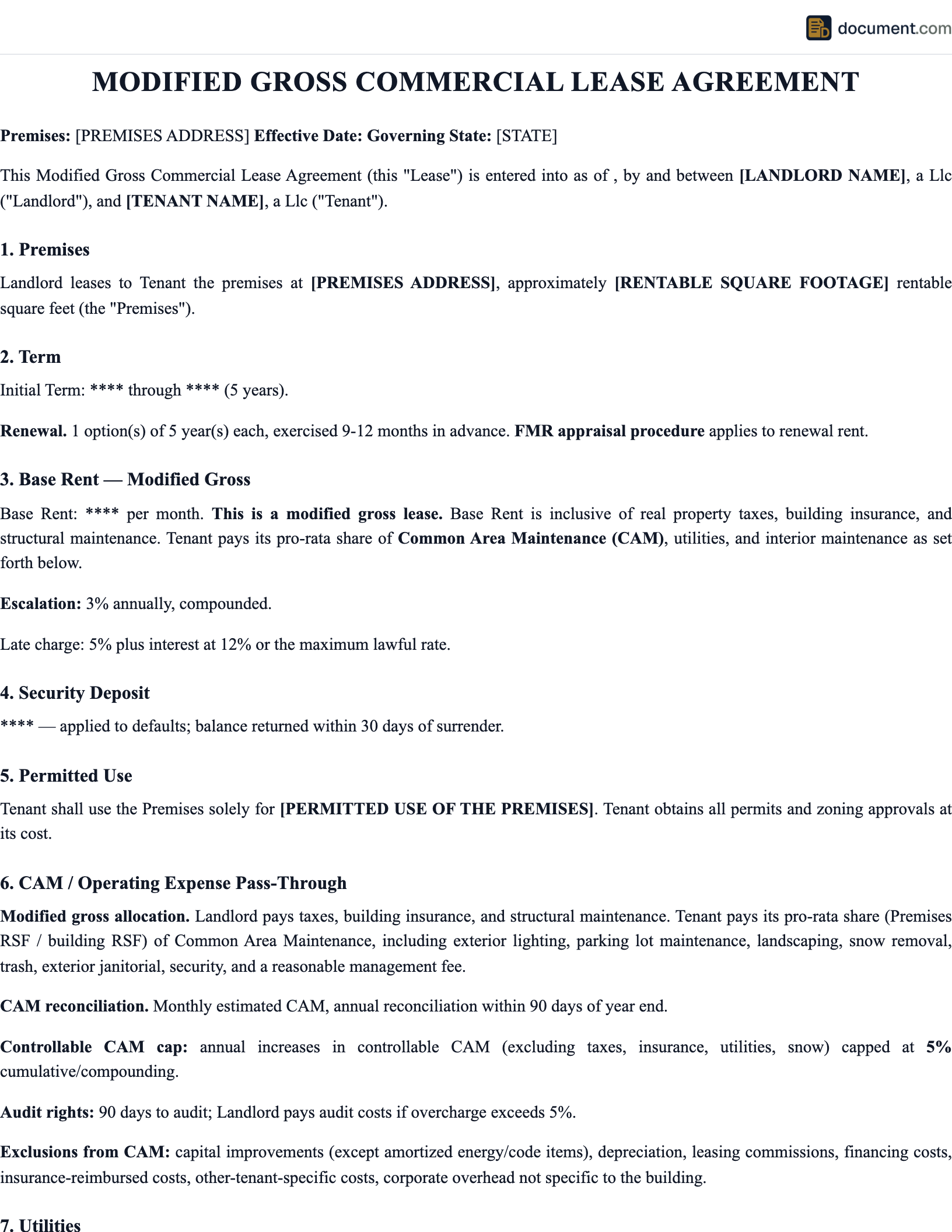
Below is a preview of our New Hampshire-specific commercial modified gross lease. Your customized document will include all fields and provisions required under NH law.
COMMERCIAL MODIFIED GROSS LEASE
STATE OF NEW HAMPSHIRE
NH-Compliant Template
PARTY A:
Name: [Full Legal Name]
Address: [New Hampshire Address]
PARTY B:
Name: [Full Legal Name]
Address: [New Hampshire Address]
PROPERTY / PREMISES:
Address: [Property Address]
County: [New Hampshire County]
NEW HAMPSHIRE COMPLIANCE
This document complies with New Hampshire (NH) state law requirements and includes all provisions mandated for this type of document in New Hampshire.