
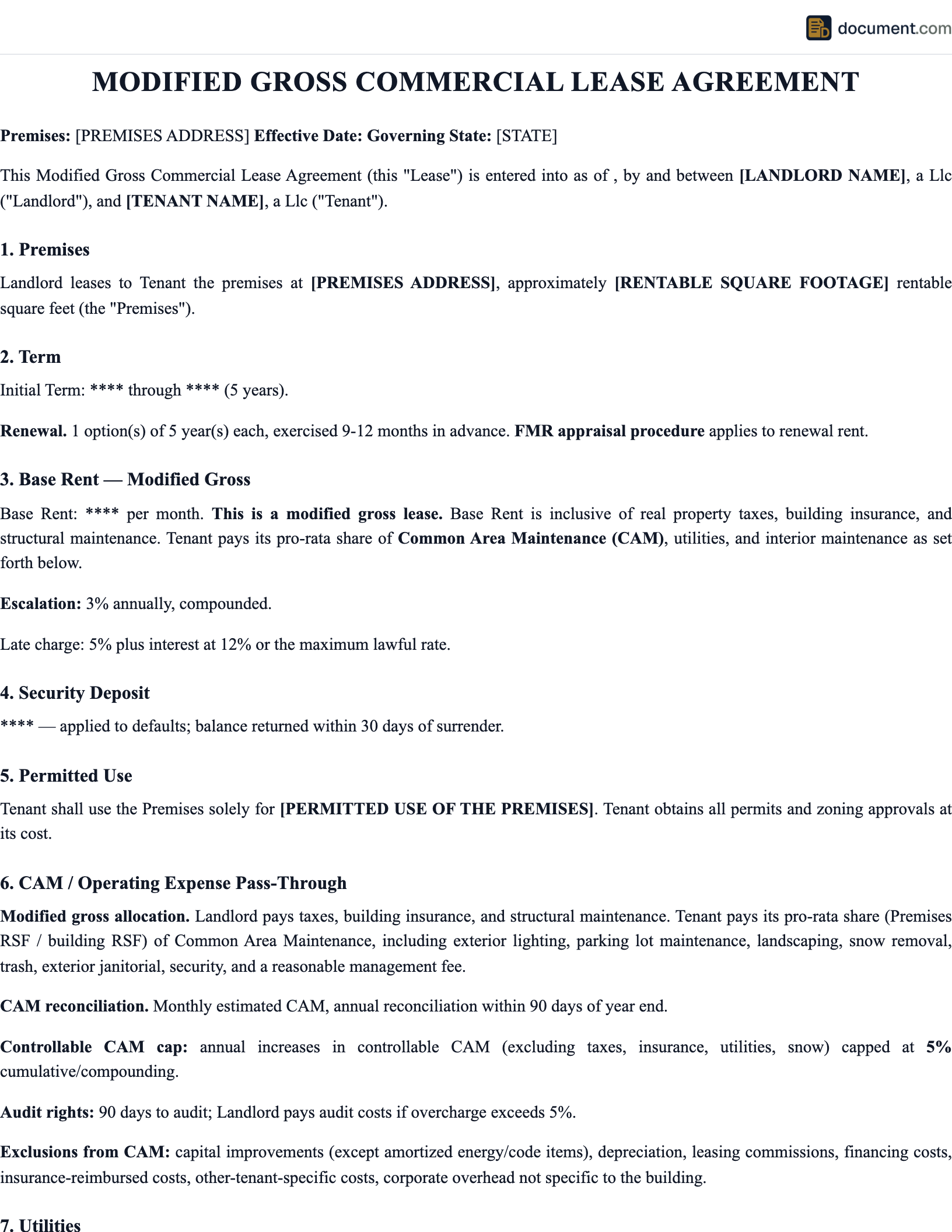



Mississippi Commercial Modified Gross Lease Overview
A modified gross commercial lease in Mississippi occupies the middle ground between a full gross lease and a net lease. The landlord and tenant negotiate a specific expense split, with the most common Mississippi structure having the landlord cover property taxes, insurance, and building maintenance from the base rent while the tenant pays utilities and janitorial directly. Mississippi's smaller commercial market and lower property values mean modified gross base rents are generally more affordable than comparable structures in larger metro states.
A notable Mississippi consideration for any commercial lease structure is the Gulf Coast's exposure to hurricanes and severe weather. For properties in Harrison, Hancock, or Jackson counties, building insurance is a significant cost tied to windstorm and hurricane risk. In a modified gross lease where the landlord covers insurance in the base rent, Gulf Coast insurance costs are embedded in the rent. Tenants in these areas should ask about the building's actual insurance premium and whether windstorm coverage is included or is a separate, exclusion-heavy policy.
MS
State-specific
Varies
Filing fees
Written
Required format
Contract
Law governs
Mississippi Legal Requirements
Mississippi modified gross commercial leases are governed by contract law. The negotiated expense split is what controls the parties' financial relationship. There are no statutory requirements specific to modified gross leases beyond the general commercial lease framework under Mississippi contract law.
Mississippi Specific Note
For Gulf Coast commercial properties in Harrison, Hancock, or Jackson counties, ask the landlord specifically about windstorm and hurricane insurance coverage. These policies are often separate from standard building insurance and can have high deductibles or exclusions. In a modified gross lease where insurance is included in the base rent, confirm exactly what coverage is in place. A major storm event without proper insurance can leave both landlord and tenant in a difficult position.
Key Modified Gross Lease Provisions for Mississippi
- Expense allocation schedule: Document exactly which expenses are included in the base rent and which the tenant pays directly. The standard Mississippi modified gross structure has the landlord covering taxes, insurance, and building maintenance while tenants pay utilities and janitorial.
- Insurance coverage scope: For Gulf Coast properties, confirm the landlord's building insurance includes windstorm and hurricane coverage. If it does not, the lease should address how the risk is allocated. Inland Mississippi properties have a lower exposure, but roof and structural repair provisions still warrant clear language.
- Casualty provision: Include clear terms for what happens if the building is damaged by severe weather. This should specify the landlord's repair obligations and timeline, the tenant's rent abatement rights during any repair period, and the conditions under which either party may terminate if damage is severe.
- Expense stop (if applicable): If the lease includes an expense stop mechanism, negotiate to set it at the building's actual current operating costs. In Mississippi's lower-cost market, even a modest stop can provide meaningful protection over a multi-year lease term.
- Annual escalation: Mississippi modified gross leases typically include annual rent increases of 2 to 3 percent. Confirm the escalation method and whether there is a cap. Fixed percentage escalation provides more predictability than uncapped CPI adjustments.
How to Draft a Commercial Modified Gross Lease in Mississippi
Creating a commercial modified gross lease in Mississippi involves several key steps to ensure the document is comprehensive, legally compliant, and protective of all parties' interests under MS law.
Request Actual Building Expense Data and Insurance Details
Ask the landlord for two to three years of actual operating expense data. For Gulf Coast properties, specifically request the building's insurance premium and confirm whether windstorm and hurricane coverage is included. Understanding actual costs before negotiating the modified gross rent and expense split prevents surprises during the lease term.
Negotiate and Document the Expense Split
Agree on exactly which categories are included in the base rent and which the tenant pays directly. In Mississippi, the standard modified gross structure has the landlord covering taxes, insurance, and maintenance while the tenant pays utilities and janitorial. Attach an expense schedule as a lease exhibit rather than relying on "modified gross" label language alone.
Address Casualty and Insurance Provisions Carefully
Mississippi modified gross leases need clear casualty provisions, particularly for coastal properties. Specify the landlord's repair obligations and timeline, the tenant's rent abatement rights during any repair period, and the conditions allowing termination if damage is extensive. For Gulf Coast properties, confirm the casualty provision covers hurricane damage specifically.
Have a Mississippi Commercial Real Estate Attorney Review
Mississippi commercial real estate attorneys are generally more affordable than in larger metro states. Legal review is particularly valuable for Gulf Coast properties where insurance and casualty provisions need careful attention. Rates typically run $175 to $350 per hour, making review cost-effective on any multi-year lease.
Execute the Lease and Track Key Dates
Sign the lease with all parties and retain fully executed copies. Calendar annual escalation dates, any option exercise windows, and renewal notice deadlines. Mississippi modified gross leases do not need to be recorded to be enforceable. Keep organized expense payment records in case questions arise about the expense allocation during the lease term.
Mississippi Modified Gross Lease Market Context
Mississippi's commercial real estate markets are anchored by Jackson (the capital and largest city), Gulfport-Biloxi on the Gulf Coast, and secondary markets including Hattiesburg, Tupelo, and Meridian. These are small to mid-size markets compared to most states, with lower commercial rents and more negotiating flexibility than larger urban markets. Local and regional landlords dominate, and tenants with creditworthy businesses often have good leverage to negotiate favorable modified gross terms.
Mississippi does not impose a commercial rent tax. Lease payments are not subject to state sales or use tax. Commercial property taxes in Mississippi are generally lower than in most other states due to lower property values, which is one reason modified gross base rents in Mississippi are more affordable than comparable structures elsewhere.
The Gulf Coast market operates somewhat differently from inland Mississippi due to the hurricane risk premium embedded in building insurance costs. This affects the economics of any lease structure where insurance is a landlord-covered expense. Gulfport, Biloxi, and Bay St. Louis landlords price that risk into their modified gross base rents, and tenants should factor it into their comparative analysis when evaluating coastal versus inland commercial space options.
Mississippi Fees & Costs
Below is a breakdown of typical costs associated with Mississippi modified gross commercial lease transactions.
| Fee / Cost | Typical Amount |
|---|---|
| Mississippi Attorney (hourly) | $175 - $350 per hour |
| Modified Gross Base Rent (annual per sqft) | $8 - $22/sqft (varies by market and building class) |
| Tenant Direct Utilities | $2 - $5/sqft annually |
| Annual Rent Escalation | Typically 2 - 3% per year or CPI-based |
Sample Mississippi Commercial Modified Gross Lease
Below is a preview of our Mississippi-specific commercial modified gross lease. Your customized document will include all fields and provisions required under MS law.
COMMERCIAL MODIFIED GROSS LEASE
STATE OF MISSISSIPPI
MS-Compliant Template
PARTY A:
Name: [Full Legal Name]
Address: [Mississippi Address]
PARTY B:
Name: [Full Legal Name]
Address: [Mississippi Address]
PROPERTY / PREMISES:
Address: [Property Address]
County: [Mississippi County]
MISSISSIPPI COMPLIANCE
This document complies with Mississippi (MS) state law requirements and includes all provisions mandated for this type of document in Mississippi.