



Michigan Commercial Modified Gross Lease Overview
A modified gross commercial lease is the dominant structure in Michigan's suburban office and light industrial markets. Rather than a true full gross lease where the landlord absorbs every operating cost, or a net lease where the tenant pays separately for taxes and insurance, Michigan modified gross leases carve out utilities and janitorial as the tenant's direct responsibility. The landlord handles property taxes, building insurance, roof and structural maintenance, and common area upkeep from the base rent.
Michigan's Proposal A property tax cap provides some predictability for landlords on existing buildings, which has made the modified gross structure practical for multi-year leases in the Detroit metro area. Tenants should be aware, though, that a building sale resets the Proposal A cap and can cause a significant jump in the landlord's property tax burden. Understanding whether a building was recently sold or reassessed is relevant when evaluating any lease that includes property tax in the landlord's expense base.
MI
State-specific
Varies
Filing fees
Written
Required format
Contract
Law governs
Michigan Legal Requirements
Michigan commercial leases are governed by contract law. The parties define the expense split through negotiation, and those written terms control the financial relationship for the entire lease term. Vague or absent expense allocation language is the leading source of Michigan commercial lease disputes.
Michigan Specific Note
Michigan's Proposal A caps annual property tax assessment increases for existing owners but resets on sale to full market value. If the building has changed hands recently, ask for the current assessed value and tax levy before agreeing to any lease structure where property tax is embedded in the base rent or subject to pass-through. A recent sale could mean taxes are higher than they appear from older rent comps in the market.
Key Modified Gross Lease Provisions for Michigan
- Expense allocation schedule: The lease must specify exactly which categories are included in the base rent (property taxes, insurance, CAM) and which the tenant pays directly (typically electricity, gas, janitorial). Generic "modified gross" language without a schedule creates disputes.
- HVAC responsibility: In older Michigan suburban office buildings, HVAC systems may serve individual suites. Confirm whether HVAC maintenance and replacement is the landlord's or tenant's obligation and document it clearly.
- Utility metering: Confirm whether utilities are separately metered or sub-metered through the landlord. If sub-metered, Michigan tenants should ask about the markup policy and whether it is capped.
- Property tax provision: Ask about the building's Proposal A status and current assessment. Include a provision allocating responsibility if the assessment increases sharply due to a building sale or reassessment during the lease term.
- Annual escalation: Michigan modified gross leases typically escalate rent 2 to 3 percent annually or through a CPI mechanism. Confirm the exact formula and whether there is a cap on CPI adjustments in high-inflation years.
How to Draft a Commercial Modified Gross Lease in Michigan
Creating a commercial modified gross lease in Michigan involves several key steps to ensure the document is comprehensive, legally compliant, and protective of all parties' interests under MI law.
Request the Building's Actual Expense History and Tax Status
Ask the landlord for two to three years of actual operating expense data, including property taxes, insurance, and maintenance costs. Also request the current taxable value and ask when the building was last sold, because a recent sale in Michigan can reset the Proposal A cap and mean significantly higher taxes going forward.
Negotiate and Document the Expense Split
Agree on the specific expense categories the landlord covers versus what the tenant pays directly. In Michigan modified gross leases, the standard split is landlord covers taxes, insurance, and CAM; tenant pays electricity, gas, and janitorial. Get this schedule attached as an exhibit or written clearly into the lease body.
Confirm HVAC and Utility Metering Arrangements
Older Michigan suburban office buildings sometimes have HVAC systems that serve individual suites. Determine whether HVAC maintenance is the landlord's or tenant's obligation. Confirm whether electricity is separately metered or sub-metered through the landlord, and if sub-metered, confirm there is no markup above the utility's actual rate.
Have a Michigan Commercial Real Estate Attorney Review
A Michigan attorney familiar with Detroit metro or Ann Arbor market standards will identify provisions that deviate from local practice and flag any lease terms that could cause unexpected expense liability. Attorney rates in Michigan typically run $250 to $450 per hour, making legal review cost-effective on any multi-year lease.
Execute the Lease and Track Key Dates
Sign the lease with all parties and retain fully executed originals. Calendar rent escalation dates, any option exercise windows, and renewal notice deadlines. Michigan modified gross leases do not need to be recorded to be enforceable, but keeping organized expense and payment records protects both parties throughout the lease term.
Michigan Modified Gross Lease Market Context
Michigan's commercial real estate market is anchored by the Detroit metro area, with major suburban office nodes in Southfield, Troy, Novi, Farmington Hills, and Ann Arbor. These markets have generally seen more tenant-favorable lease terms in recent years due to elevated office vacancy following pandemic-era shifts in how businesses use space. Tenants with creditworthy operations can often negotiate generous tenant improvement allowances and reasonable expense split terms in modified gross leases.
Michigan does not impose a commercial rent tax, so monthly rent payments are not subject to state or local sales tax. The primary cost exposure in a Michigan modified gross lease beyond the base rent is direct utility costs and the annual escalation provision. Michigan utility rates for electricity and gas are moderate compared to coastal states but can be a meaningful expense in energy-intensive operations.
Detroit industrial markets (Warren, Sterling Heights, Livonia) typically use modified gross or net structures depending on building age and ownership type. Newer industrial buildings are more likely to use NNN structures, while older owner-occupied industrial spaces being leased out often use modified gross arrangements where the landlord handles taxes and insurance.
Michigan Fees & Costs
Below is a breakdown of typical costs associated with Michigan modified gross commercial lease transactions.
| Fee / Cost | Typical Amount |
|---|---|
| Michigan Attorney (hourly) | $250 - $450 per hour |
| Modified Gross Base Rent (annual per sqft) | $18 - $35/sqft office; $6 - $14/sqft industrial |
| Tenant Direct Utilities (electricity and gas) | $2 - $5/sqft annually (varies by use and building) |
| Annual Rent Escalation | Typically 2 - 3% per year or CPI-based |
Sample Michigan Commercial Modified Gross Lease
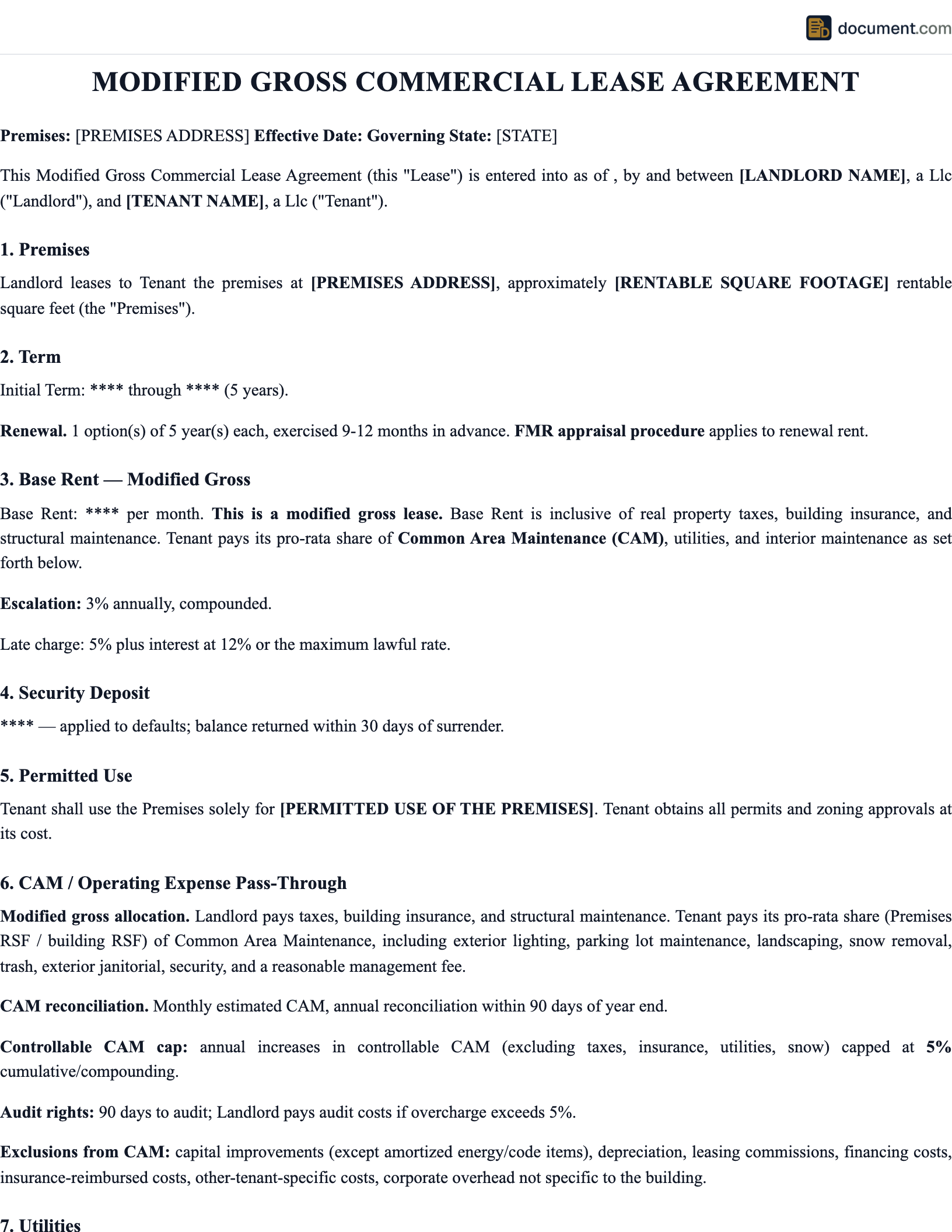
Below is a preview of our Michigan-specific commercial modified gross lease. Your customized document will include all fields and provisions required under MI law.
COMMERCIAL MODIFIED GROSS LEASE
STATE OF MICHIGAN
MI-Compliant Template
PARTY A:
Name: [Full Legal Name]
Address: [Michigan Address]
PARTY B:
Name: [Full Legal Name]
Address: [Michigan Address]
PROPERTY / PREMISES:
Address: [Property Address]
County: [Michigan County]
MICHIGAN COMPLIANCE
This document complies with Michigan (MI) state law requirements and includes all provisions mandated for this type of document in Michigan.