
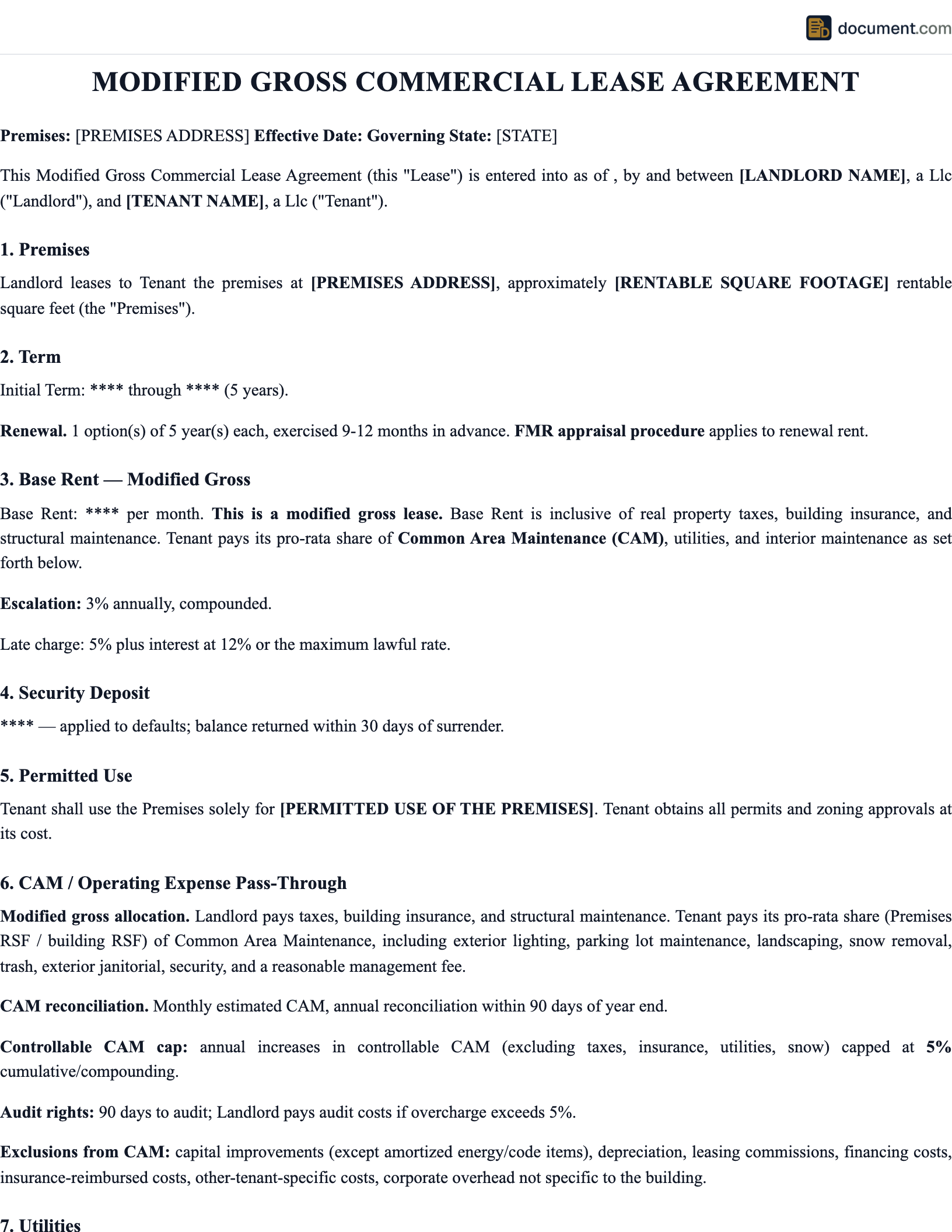



Maine Commercial Modified Gross Lease Overview
A modified gross commercial lease in Maine is a negotiated hybrid structure where the landlord absorbs certain operating costs in the base rent and the tenant handles others directly. Maine contract law governs the relationship, and the written lease is the controlling authority. Portland is Maine's primary commercial market, and modified gross leases are the standard structure for Portland office and mixed-use space where full triple-net terms are uncommon outside of single-tenant retail.
Two expense categories set Maine modified gross leases apart from those in other states. First, municipal property taxes in Portland are among the highest in New England, which makes the tax allocation decision genuinely consequential. Second, heating fuel costs in Maine are significant budget items for commercial tenants because of the state's demanding winters. A Portland modified gross lease that does not clearly address both municipal taxes and heating fuel leaves substantial financial exposure unresolved. Maine imposes no commercial rent tax, so the rent figure stated in the lease is the total rent obligation without a tax overlay.
ME
State-specific
Varies
Filing fees
Written
Required format
Contract
Law governs
Maine Legal Requirements
Maine modified gross leases must satisfy the statute of frauds for terms over one year and must expressly address the expense categories unique to Maine's climate and high-tax environment.
Maine Specific Note
Maine municipal assessors reassess commercial property values periodically, and Portland mil rates have risen over recent years. A modified gross lease that includes property taxes in base rent without an expense stop exposes the landlord to unhedged reassessment risk. Requiring a base-year figure in the lease and defining how increases above that level are shared is standard practice in the Portland commercial market.
Document Requirements
- Written Form: Maine statute of frauds requires commercial leases for terms over one year to be in writing and signed by the party to be charged
- Heating Fuel Provision: The lease must expressly state whether heating fuel is included in base rent or is a direct tenant obligation; if included, an expense stop keyed to the base-year fuel cost is essential
- Municipal Tax Allocation: Property tax responsibility should reference the municipal assessor and specify whether increases above a base-year amount are passed through to the tenant
- Snow Removal Assignment: The lease must clearly assign snow plowing, salting, and roof snow removal as either landlord costs in base rent or tenant-reimbursed expenses given Maine's winter conditions
- HVAC Responsibility: Specify who services, repairs, and replaces HVAC units given Maine's demanding heating and cooling seasons
- Annual Escalation: CPI-based or fixed-percent annual rent increases protect landlords who absorb municipal taxes and fuel costs in base rent over multi-year terms
How to Draft a Commercial Modified Gross Lease in Maine
Drafting a Maine modified gross lease requires addressing the state's climate and high-tax environment before finalizing the expense structure. Skipping these steps produces a lease that looks complete on paper but leaves significant financial risk unresolved.
Research Municipal Taxes and Heating Costs
Before negotiating, obtain the current municipal assessment, mil rate, and annual tax bill for the property from the municipal assessor. Also request the landlord's last three years of actual heating fuel bills. These two figures will determine whether including taxes and heat in base rent is financially viable and where expense stops should be set.
Negotiate the Expense Split
Agree on the specific allocation for every expense category before drafting. For a Portland office building, the typical starting point is landlord covers taxes, insurance, roof, and structure; tenant pays electricity, heating fuel, janitorial, and interior maintenance. Adjust the split based on building age, heating system type, and market conditions.
Draft Expense Schedule and Winter Provisions
Create a detailed exhibit assigning each expense category. Include specific winter-related provisions: how snow removal is funded and by whom, whether roof snow removal is a landlord obligation, and whether HVAC replacement during a lease term is a landlord or tenant obligation. Set expense stops for any landlord-absorbed costs that are subject to meaningful annual volatility.
Add Escalation and Maine-Specific Provisions
Include annual rent escalation (CPI or fixed percent), Maine governing law and county selection, a recording authorization so the tenant can file a memorandum, and early termination provisions if either party needs them. For Portland Historic District properties, add provisions addressing restoration obligations on lease expiration.
Execute and Record
Both parties sign with authorized signatories. Notarize signatures if a memorandum will be recorded with the Cumberland County Registry of Deeds (or the appropriate Maine county registry). Recording protects the tenant's leasehold interest against subsequent encumbrances on the property.
Maine-Specific Key Provisions
Several provisions are particular to Maine that do not arise with the same force in other states.
Heating fuel provisions deserve a full paragraph in a Maine modified gross lease, not just a brief mention in the expense schedule. The lease should specify the fuel type (oil, natural gas, or district heat), who holds the supply contract, how billing is structured if the landlord pays the supplier directly, and what happens if fuel prices spike significantly beyond the base-year level. For oil-heated buildings in Portland, a provision allowing the landlord to pass through heating costs above a defined per-gallon threshold is a reasonable protection against energy price volatility.
Portland Historic District and Old Port properties may have additional lease considerations around signage restrictions, facade modifications, and restoration obligations. Portland Planning and Development has regulations governing exterior changes to properties in designated historic districts. The lease should specify what interior and exterior improvements the tenant may make, who pays for restoration on lease expiration, and whether the landlord must approve signage beyond what applicable zoning and historic district rules already govern.
Maine Fees & Costs
Below is a breakdown of typical costs associated with commercial lease transactions in Maine. Actual fees may vary by county and specific circumstances.
| Fee / Cost | Typical Amount |
|---|---|
| Base Rent (Portland office / retail) | $16 - $28 per sq ft annually |
| Tenant-Paid Utilities (electricity, heat if direct) | $2.50 - $6.00 per sq ft annually |
| Municipal Tax Stop Overage (if applicable) | Varies by municipal assessment cycle |
| Maine Attorney Review | $800 - $2,500 |
| Registry of Deeds Recording (memorandum) | $19 - $90 depending on county and pages |
Sample Maine Commercial Modified Gross Lease
Below is a preview of our Maine-specific commercial modified gross lease. Your customized document will include all fields and provisions required under ME law.
COMMERCIAL MODIFIED GROSS LEASE
STATE OF MAINE
ME-Compliant Template
PARTY A:
Name: [Full Legal Name]
Address: [Maine Address]
PARTY B:
Name: [Full Legal Name]
Address: [Maine Address]
PROPERTY / PREMISES:
Address: [Property Address]
County: [Maine County]
MAINE COMPLIANCE
This document complies with Maine (ME) state law requirements and includes all provisions mandated for this type of document in Maine.