
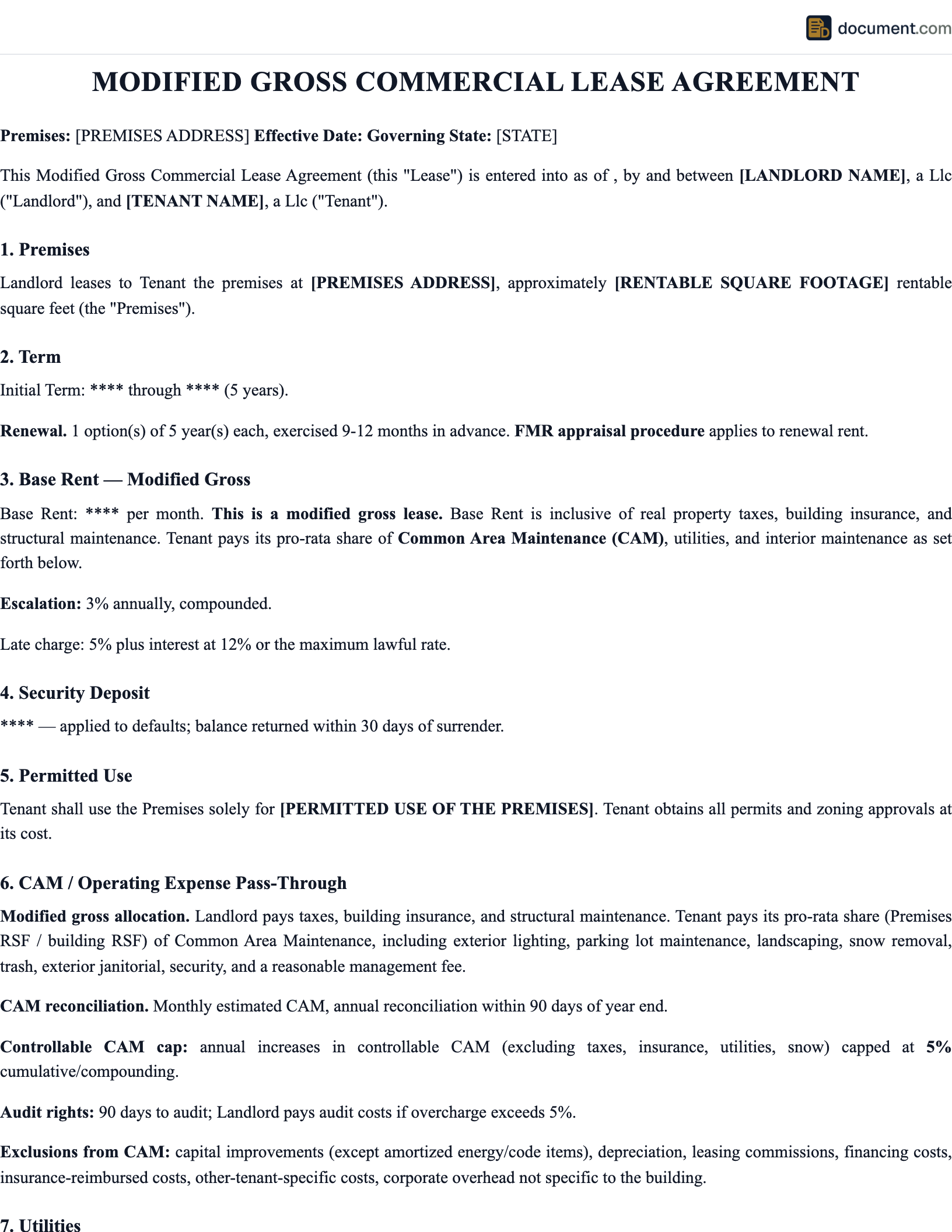



Kansas Commercial Modified Gross Lease Overview
A modified gross lease in Kansas is a negotiated hybrid structure where the parties agree in writing on which operating expenses the landlord absorbs and which the tenant pays separately. Kansas commercial real estate is governed by contract law, meaning the written lease is the primary authority for the relationship. There are no special statutes mandating a particular expense split, so everything from property tax responsibility to HVAC servicing obligations is open for negotiation between the parties.
The Wichita and Kansas City suburban office markets both make frequent use of modified gross structures. Overland Park office parks along the College Boulevard corridor commonly use modified gross leases where base rent covers landlord taxes and insurance while tenants handle utilities and interior maintenance. This structure suits mid-size tenants who want cost predictability without absorbing the full pass-through risk of a triple-net arrangement. Kansas has no commercial rent tax, so rent calculations under a modified gross lease are not complicated by state tax overlays.
KS
State-specific
Varies
Filing fees
Written
Required format
Contract
Law governs
Kansas Legal Requirements
Kansas modified gross leases must satisfy the state's statute of frauds for terms exceeding one year and should clearly document every expense category to avoid disputes under Kansas contract law.
Kansas Specific Note
Kansas courts interpret commercial lease terms as written. Ambiguous expense allocations in a modified gross lease are a common source of litigation. Every line item should be explicitly assigned to either the landlord or the tenant, including HVAC servicing, parking lot maintenance, and common-area utilities, which are sometimes overlooked in standard form leases.
Document Requirements
- Written Form: Kansas statute of frauds requires leases for terms longer than one year to be in writing and signed by the party to be charged
- Expense Schedule: A detailed schedule or exhibit listing each operating expense and identifying which party bears responsibility is essential in any modified gross structure
- Property Tax Provisions: The lease should specify how Kansas county appraiser assessments flow through, whether via an expense stop or direct tenant obligation
- HVAC Responsibility: Given Kansas temperature extremes, the lease should explicitly assign HVAC maintenance, repair, and replacement between the parties
- Escalation Clause: Annual rent adjustments tied to CPI or a fixed percentage protect the landlord against inflation over multi-year Kansas commercial lease terms
- Authorized Signatories: Entities must sign through an officer or member with proper authority; corporations should attach a resolution and LLCs should verify the operating agreement permits the signing member to bind the company
How to Draft a Commercial Modified Gross Lease in Kansas
Drafting a Kansas modified gross lease requires agreeing on the expense split before touching the lease form, because the structure of the document flows from those business decisions.
Agree on the Expense Split
Before drafting, both parties should reach a clear understanding of which expenses the landlord covers in base rent and which the tenant pays directly or reimburses. For Kansas office leases, the typical starting point is landlord covers property taxes and building insurance; tenant covers utilities, janitorial, and suite HVAC maintenance.
Research Operating Costs for the Building
Request three years of actual operating expense data from the landlord. For Kansas properties, pay particular attention to property tax history from the county appraiser, energy costs given heating and cooling demands, and any deferred maintenance that could produce large repair bills during the lease term.
Draft the Expense Schedule and Base Rent
Document the agreed expense allocation in a detailed schedule attached to the lease. Set the base rent to reflect only those costs the landlord has agreed to absorb. Include an expense stop if the landlord is retaining property taxes so that a significant Kansas county reassessment does not fall entirely on the landlord.
Include Kansas-Specific Provisions
Add provisions covering annual rent escalation (CPI or fixed percent), HVAC service contract requirements given Kansas climate demands, Kansas governing law and county venue selection, and recording of a memorandum with the Register of Deeds if the term exceeds three years.
Review, Execute, and File
Have a Kansas commercial real estate attorney review the final draft. Both parties sign; entities should use notarized signatures if recording a memorandum. Record the lease memorandum with the appropriate Kansas county Register of Deeds to protect the tenant's leasehold interest.
Kansas-Specific Key Provisions
Beyond the basic modified gross expense split, several provisions matter specifically in Kansas transactions.
Property tax escalation language is important because Kansas county appraisers reassess property values, and a significant increase during a long-term lease can erode a landlord's returns if taxes are included in base rent without a cap or expense stop mechanism. Including a base year tax figure with a pass-through for increases above a defined threshold gives landlords protection without burdening tenants with full NNN exposure.
HVAC replacement provisions are a practical necessity in Kansas. The continental climate produces both extreme summer heat and cold winters, meaning commercial HVAC systems wear more quickly than in mild-climate states. The lease should specify who pays for routine servicing, who pays for repairs below a defined dollar threshold, and how replacement of a failed unit is handled when a packaged rooftop unit costs $15,000 or more. A Kansas lease that is silent on HVAC replacement will generate a dispute before the ink is dry.
Kansas Fees & Costs
Below is a breakdown of typical costs associated with commercial lease transactions in Kansas. Actual fees may vary by county and specific circumstances.
| Fee / Cost | Typical Amount |
|---|---|
| Base Rent (Wichita / Overland Park office) | $14 - $26 per sq ft annually |
| Tenant-Paid Utilities | $1.50 - $4.00 per sq ft annually |
| Expense Stop Overage (if applicable) | Varies by base year and assessment cycle |
| Kansas Attorney Review | $750 - $2,500 |
| Register of Deeds Recording (memorandum) | $16 - $80 depending on county and pages |
Sample Kansas Commercial Modified Gross Lease
Below is a preview of our Kansas-specific commercial modified gross lease. Your customized document will include all fields and provisions required under KS law.
COMMERCIAL MODIFIED GROSS LEASE
STATE OF KANSAS
KS-Compliant Template
PARTY A:
Name: [Full Legal Name]
Address: [Kansas Address]
PARTY B:
Name: [Full Legal Name]
Address: [Kansas Address]
PROPERTY / PREMISES:
Address: [Property Address]
County: [Kansas County]
KANSAS COMPLIANCE
This document complies with Kansas (KS) state law requirements and includes all provisions mandated for this type of document in Kansas.