
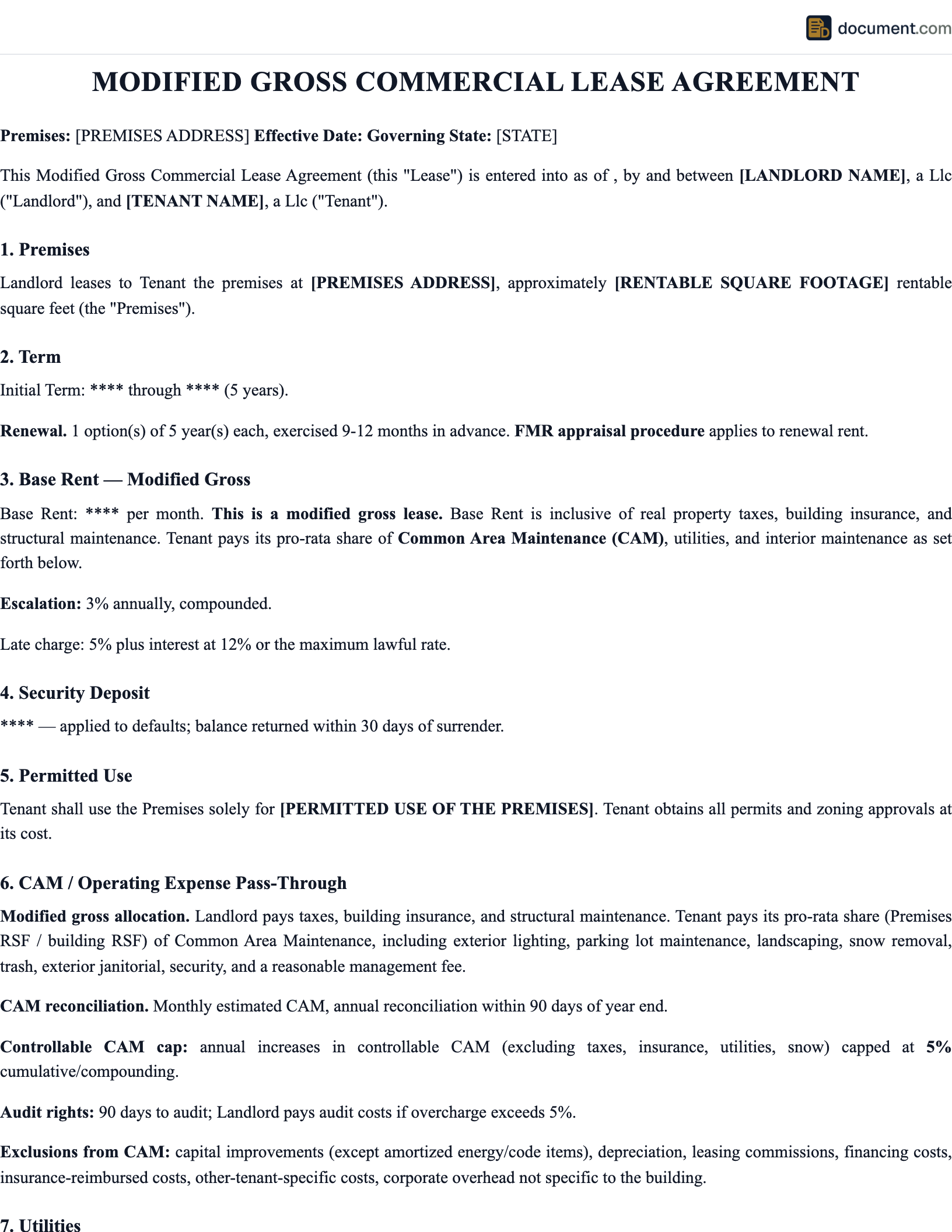



Alaska Commercial Modified Gross Lease Overview
A commercial modified gross lease in Alaska divides operating expenses between landlord and tenant along a negotiated line rather than placing all costs on one side. Alaska commercial real estate is governed entirely by contract law, and the state provides no statutory framework defining what a modified gross structure must include. Whatever the lease document says controls the relationship, which means careful and complete drafting is essential.
The Anchorage office market is the most active commercial leasing market in Alaska, and modified gross structures are common there, particularly in Midtown and downtown multi-tenant buildings. Landlords in those buildings typically retain property taxes, building insurance, and central heating fuel as their expenses while tenants pay metered electricity and interior upkeep. Alaska's climate creates elevated costs for building systems and snow removal, making it critical to identify who pays those costs before the lease is signed.
AK
State-specific
Varies
Filing fees
Written
Required format
Contract
Law governs
Alaska Legal Requirements
Alaska has specific requirements for commercial lease documents that must be followed to ensure enforceability. Understanding AK's legal framework helps protect both landlord and tenant interests.
Alaska Specific Note
Alaska has no state statute defining modified gross lease defaults, no state commercial rent tax, but some municipalities impose local sales taxes that can apply to rent. Snow removal and heating fuel are high-cost items in Alaska that must be assigned to one party in the lease. For any commercial lease in Alaska, attorney review is strongly recommended before execution.
Document Requirements
- Written Form Required: Alaska Statute Section 09.25.010 requires leases for terms longer than one year to be in writing and signed by the party to be charged
- Heating and Fuel Allocation: The lease must specify which party is responsible for heating fuel, whether the building uses natural gas, heating oil, or electric heat, since this is often the largest variable cost in Alaska
- Snow Removal Responsibility: The party responsible for parking lot and walkway snow removal should be identified in the lease; in Alaska this is a recurring and significant cost
- Expense Allocation List: All major operating expense categories must be assigned explicitly; Alaska courts apply contract law and will not supply missing terms for sophisticated parties
- Municipality Tax Check: Verify whether the property's municipality imposes a local sales tax on commercial rent, since Alaska municipalities vary on this point
- Entity Authority: Signatories for corporations and LLCs must have documented authority to bind the entity under Alaska law
How to Draft a Commercial Modified Gross Lease in Alaska
Alaska's climate and remote geography make certain drafting decisions more consequential than they would be in other states. These steps focus on the areas where Alaska commercial modified gross leases require the most care.
Identify and Allocate Climate-Driven Costs
Before drafting, both parties should understand the building's historical heating and snow removal costs. These figures should be available from the landlord's operating records. Once the actual cost history is known, the parties can negotiate which side bears each expense with realistic expectations about the financial commitment involved.
Draft the Complete Expense Schedule
Prepare a written schedule listing every material operating cost category with a clear designation of landlord responsibility, tenant responsibility, or shared with a proportionate allocation method. Categories to include are property taxes, building insurance, heating fuel, electricity (common areas and tenant space separately), water and sewer, snow removal, parking lot upkeep, HVAC maintenance, HVAC replacement, and janitorial for each area.
Address Rent and Escalation Provisions
Set a clear base rent with a stated escalation method. Fixed annual increases work well in Alaska's commercial market because they provide predictability in a market where contractor and material costs can fluctuate. If the tenant pays variable costs directly, consider negotiating a cap on controllable expense categories to protect the tenant's budget from unexpected spikes in fuel or maintenance costs.
Check Local Municipality Tax Rules
Alaska has no state sales tax, but local municipalities vary. Before finalizing the lease, confirm whether the municipality where the property is located imposes a local sales tax on commercial rent. If a local tax applies, the lease should state which party bears that obligation, as this affects the true cost of occupancy.
Execute with Authorized Signatures
Both parties should execute the lease through representatives with documented authority. Corporate or LLC signatories should have board or member authorization on record. Notarization is not required for the lease to be binding in Alaska, but if the parties want to record the lease with the Alaska District Recorder, notarization is required.
Alaska-Specific Key Provisions
The expense allocation schedule is the central provision in any Alaska modified gross lease. A well-structured schedule lists every major cost category and clearly identifies who pays it. For Alaska buildings, that list should always include heating fuel (with the fuel type specified), snow removal and ice management, parking lot sanding, and emergency repair callout procedures for frozen pipes or other climate-related failures. These categories are unique to cold-climate markets and are often missing from templates written for other states.
Casualty and force majeure provisions deserve particular care in Alaska. Permafrost movement, seismic activity, and severe winter weather events can damage buildings in ways that are unusual in most states. The lease should address the respective obligations of landlord and tenant when the premises become partially or fully unusable, and should provide a mechanism for rent abatement if the tenant loses beneficial use of the space.
Alaska commercial leases should also address contractor access provisions. Because Alaska has a limited pool of commercial contractors, scheduling and lead times for building repairs and tenant improvements can be longer than in the lower 48. The lease should allow adequate notice periods and reasonable response time provisions that reflect Alaska construction market realities rather than timelines typical of major metropolitan markets.
Alaska Fees & Costs
Below is a breakdown of typical costs associated with commercial lease transactions in Alaska. Actual fees may vary by county and specific circumstances.
| Fee / Cost | Typical Amount |
|---|---|
| Base Modified Gross Rent (Anchorage office) | $20 - $35 per sq ft annually |
| Tenant Electricity Costs | $2 - $5 per sq ft annually |
| Landlord Heating Fuel Cost (included in rent) | $3 - $8 per sq ft annually |
| Attorney Lease Review | $750 - $2,500 |
| Lease Recording (if elected) | $30 - $100 |
Sample Alaska Commercial Modified Gross Lease
Below is a preview of our Alaska-specific commercial modified gross lease. Your customized document will include all fields and provisions required under AK law.
COMMERCIAL MODIFIED GROSS LEASE
STATE OF ALASKA
AK-Compliant Template
PARTY A:
Name: [Full Legal Name]
Address: [Alaska Address]
PARTY B:
Name: [Full Legal Name]
Address: [Alaska Address]
PROPERTY / PREMISES:
Address: [Property Address]
County: [Alaska County]
ALASKA COMPLIANCE
This document complies with Alaska (AK) state law requirements and includes all provisions mandated for this type of document in Alaska.